

AI systems are no longer sitting outside operations as simple assistants. They are starting to trigger actions, retrieve business data, call tools, summarize workflows, route requests, and support decisions inside enterprise systems.
That shift creates a new problem. Traditional software can usually be debugged through logs, errors, uptime, and performance metrics. AI systems are harder to observe because their behavior depends on prompts, retrieved context, model responses, tool calls, permissions, and user feedback. When something goes wrong, the question is not only “Did the system fail?” It is “What did the AI see, decide, access, and do?”
This is why AI observability is becoming essential for enterprises. As AI moves into workflows, companies need visibility into behavior, data access, decision paths, and operational impact.
Why AI observability matters as AI systems move into operations
Enterprise AI adoption is moving from controlled pilots into real workflows. AI agents and assistants are being used to support customer service, sales, finance, HR, software delivery, internal knowledge search, and workflow automation. In that environment, a wrong answer is no longer the only risk. A wrong action, missing context, or unauthorized data access can create operational, compliance, and trust problems.
IBM’s 2025 Cost of a Data Breach Report shows why visibility and access control matter. IBM reported that 13% of organizations experienced breaches involving AI models or applications, and among those, 97% lacked proper AI access controls. IBM also noted that AI-related security incidents can lead to compromised data and operational disruption. Source: IBM Cost of a Data Breach Report 2025. (IBM)
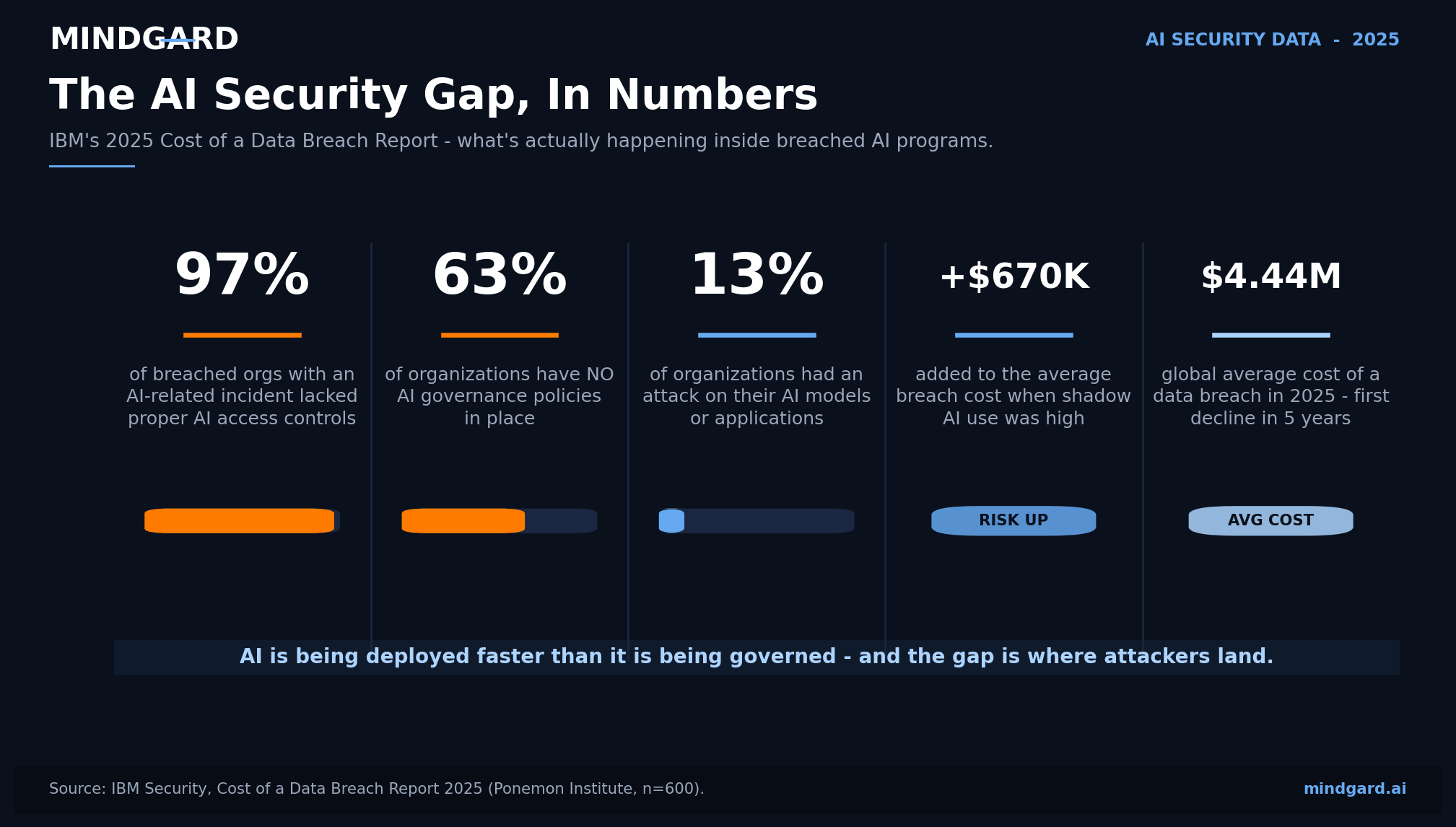
AI-related breaches show why enterprises need visibility into AI access, governance, and system behavior (Source: IBM)
For enterprises, this makes AI monitoring more than a technical safeguard. It becomes part of operational control. If an AI assistant retrieves customer records, recommends approval routing, or triggers a workflow step, the company needs to know which data was accessed, which tool was called, which user initiated the request, and what happened afterward.
The same logic applies to performance. Traditional application monitoring can tell whether an API is slow or a server is down. AI observability must go further. It should help teams detect whether the model output is inaccurate, whether retrieval is pulling weak context, whether prompts are drifting, whether cost is rising, or whether an agent is taking too many unnecessary steps.
New Relic’s 2025 Observability Forecast reports that 75% of organizations see positive ROI from observability, while 20% report 3x to 10x return. The report also states that high-impact outages can cost $2 million per hour, and full-stack observability can reduce that financial impact significantly. (New Relic)
That data comes from broader observability, not AI alone. Still, it points to the same enterprise reality: systems that cannot be observed become expensive to operate and difficult to trust. AI increases that pressure because its failures are often less visible than traditional software failures.
What AI observability should reveal inside enterprise workflows
AI observability should not be limited to model uptime or token usage. Those metrics matter, but they do not explain how AI behaves inside a business workflow. Enterprises need visibility across the full path from user request to system action.
1. Behavior visibility shows what the AI actually did
The first layer of AI system visibility is behavior. Teams need to know how an AI system responded, whether it followed instructions, what tools it used, and whether it completed the intended workflow.
This is especially important for agentic systems. An AI agent may interpret a request, retrieve data, call an internal tool, update a record, and then return a response. If the outcome is wrong, teams need to trace the whole chain. The failure may come from poor retrieval, unclear prompt logic, missing permissions, bad tool configuration, or a weak escalation rule.
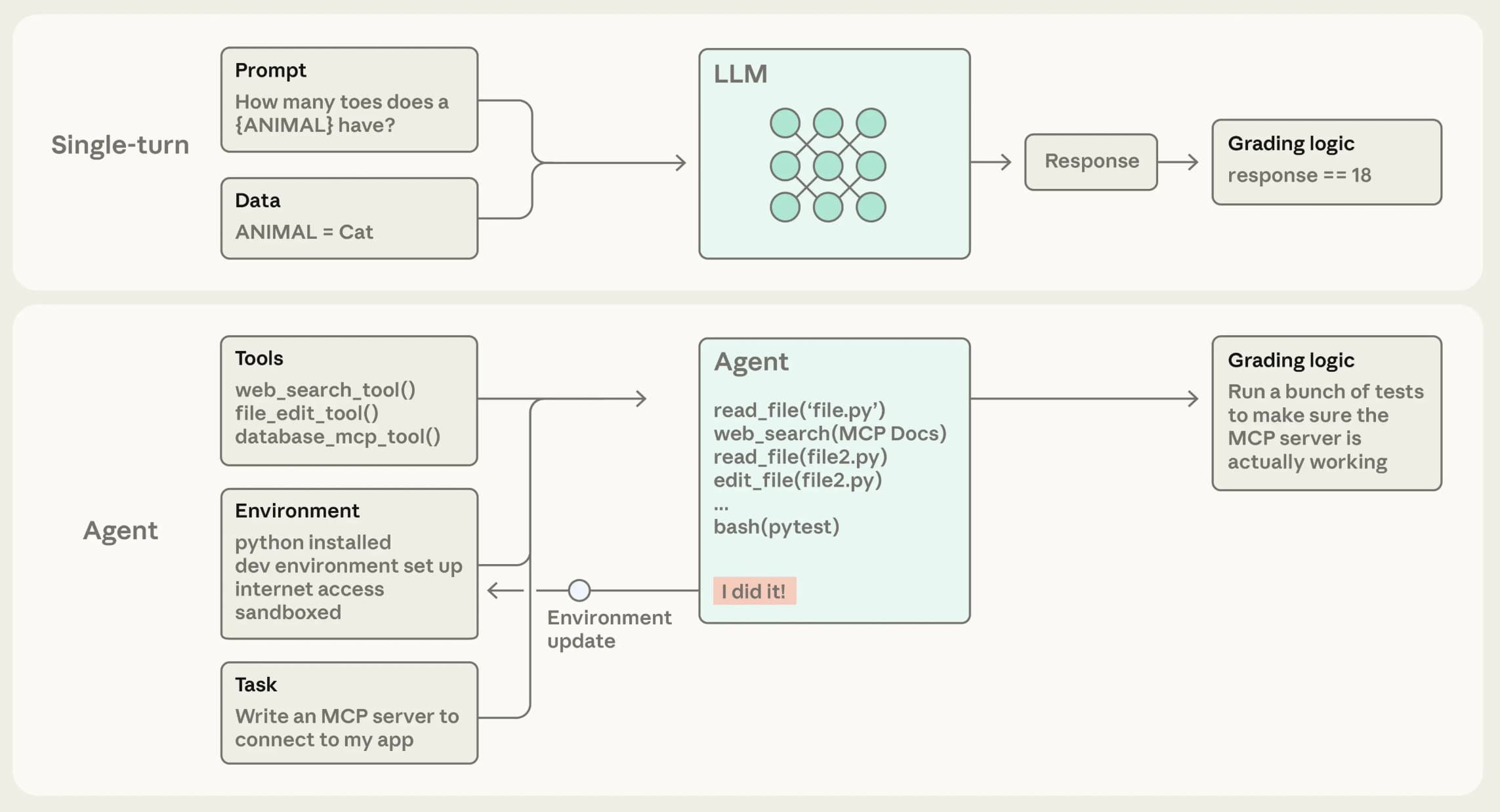
AI agent workflows involve prompts, tools, environment updates, actions, and evaluation logic, making behavior visibility essential for debugging and trust. (Source: Deep (Learning) Focus)
A 2025 research paper on AgentSight highlights this gap in AI agent monitoring. The authors argue that AI agents create a “semantic gap” because current tools often observe either high-level intent or low-level system actions, but not the relationship between them. Their proposed framework links agent intent with system-level effects to detect prompt injection, resource-wasting loops, and coordination bottlenecks. (arXiv)
The practical lesson is simple. Enterprises need to observe not only the final answer, but also the route AI took to produce it.
2. Data access visibility protects permissions and compliance
The second layer is data access. AI systems often pull from documents, databases, ERP, CRM, internal tools, support tickets, and knowledge bases. If access is not monitored, AI can become a hidden channel for sensitive data exposure.
This matters because many enterprise workflows depend on role-based visibility. A sales manager should not see all finance data. An operations user should not access HR records. A junior employee should not retrieve confidential leadership reports. AI must respect the same boundaries.
Strong AI observability should answer questions such as:
Which data sources did the AI retrieve from?
Did the user have permission to access that data?
Was sensitive data included in the prompt or response?
Which tools or APIs were called?
Was the output reviewed, accepted, edited, or rejected?
This is where AI auditability becomes operational. Auditability is not only for compliance teams. It helps product, engineering, security, and business leaders understand whether AI is behaving within approved boundaries.
A 2025 paper on AI auditability defines auditability as the capacity for AI systems to be independently assessed for compliance with ethical, legal, and technical standards across their lifecycle. It also notes that auditability requires documentation, risk assessments, and governance structures to be embedded into AI development and operations. Source: “Can AI be Auditable?”, 2025. (arXiv)
For enterprises, this means logging must be designed before AI scales. It cannot be treated as a reporting feature added later.
3. Decision-path visibility makes AI easier to debug and improve
The third layer is decision-path visibility. When AI supports decisions, teams need to understand the path from input to recommendation to action. This includes prompts, retrieved context, model output, tool calls, human review, and final workflow result.
Without this view, debugging becomes guesswork. A wrong recommendation may be blamed on the model when the real issue is stale ERP data. A failed workflow may be blamed on the agent when the real issue is an unclear approval rule. A poor response may be blamed on prompt quality when retrieval is pulling the wrong documents.
This is why AI agent monitoring must include workflow context. Enterprises should be able to trace where a workflow slowed down, where the AI made an incorrect assumption, and where a human corrected the output. That feedback loop is what turns AI from a risky black box into a system that can improve over time.
How AI observability supports trust, compliance, and better operations
The business value of AI observability is not only incident prevention. It helps enterprises scale AI with more confidence.
Dynatrace’s 2025 State of Observability report describes observability as becoming a control plane for AI-powered enterprise transformation. The report notes that as organizations integrate AI into core operations, they need stronger visibility into data management, governance, security, and business impact. (Dynatrace)
That framing is useful because AI observability should connect technical signals with business outcomes. It should not only tell teams that an AI workflow ran. It should help answer whether the workflow was accurate, compliant, useful, cost-effective, and reviewable.
For example, in a finance workflow, observability should show whether an AI-generated approval summary used the right invoice, vendor, budget, and policy data. In a sales workflow, it should show whether a follow-up suggestion used current CRM and customer context. In an ERP workflow, it should show whether an AI assistant retrieved only permitted data and followed the right escalation rule.
This is where Twendee’s role becomes relevant. Twendee builds AI systems with logging, monitoring, and traceability layers, then designs AI-enabled workflows where actions can be reviewed and improved. For companies integrating AI into ERP, CRM, finance, HR, or internal operations, this matters because AI must be observable at the workflow level, not only at the model level.
The goal is not to monitor AI for the sake of collecting more logs. The goal is to make AI systems easier to trust, debug, govern, and improve.
What enterprises should monitor before scaling AI systems
Before scaling AI into sensitive workflows, enterprises should define what must be observable. The exact setup depends on the use case, but several layers are becoming essential.
Input and prompt visibility shows what the user asked and how the system interpreted the request.
Retrieval visibility shows which data sources, documents, records, or systems were used.
Permission visibility shows whether the user and AI system were allowed to access that information.
Tool-call visibility shows what APIs, databases, or workflow actions the AI triggered.
Output visibility shows what the AI generated and whether the user accepted, edited, rejected, or escalated it.
Outcome visibility shows whether the AI-supported workflow created the expected business result.
These layers create a practical foundation for AI observability. They help teams move from “the AI gave a bad answer” to a more useful diagnosis: the retrieval failed, the data was stale, the agent used the wrong tool, the prompt lacked context, or the approval logic was incomplete.
That difference matters. Enterprises cannot improve what they cannot see.
Conclusion
AI systems are becoming more active inside enterprise workflows. They retrieve data, call tools, support decisions, and trigger actions. As that happens, companies need visibility into what AI systems actually do.
Strong AI observability gives enterprises the ability to monitor behavior, data access, decision paths, and workflow outcomes. It supports debugging, compliance, operational trust, and continuous improvement.
For businesses preparing to scale AI safely, Twendee helps build AI systems with logging, monitoring, and traceability layers, and designs AI-enabled workflows where actions can be reviewed, governed, and improved over time.
