Subscription management software is often discussed as a billing tool. That view is becoming too narrow. As businesses grow recurring revenue, recurring billing, subscription operations, SaaS billing system, and subscription lifecycle management become part of a much larger operational challenge: keeping customer, finance, product, and service data aligned after every subscription change.
The real problem is not that subscription businesses need to send invoices repeatedly. It is that every recurring relationship keeps changing.
Subscription Growth Changes More Than Revenue
Subscription businesses are fundamentally different from businesses built around one-time sales. The commercial relationship does not end after the customer signs a contract—it continues to evolve throughout the customer lifecycle.
Customers upgrade plans, add users, exceed usage limits, renew contracts, downgrade services, or pause subscriptions. Every one of these actions creates operational consequences that extend far beyond billing.
This trend is becoming even more pronounced as SaaS pricing models evolve. According to Paddle's guide to SaaS pricing models and strategies, many of today's fastest-growing SaaS companies are moving toward hybrid pricing models that combine recurring subscriptions with usage-based components. While these models better align pricing with customer value, they also introduce significantly more complexity into billing and operational workflows.
Managing subscriptions therefore becomes much more than collecting payments every month.
A single customer account may experience dozens of operational events throughout its lifetime, each requiring multiple business functions to remain aligned. Consider just a few examples:
An upgrade changes pricing, invoice calculations, and revenue forecasts.
A customer exceeding usage thresholds affects billing, reporting, and customer communication.
A renewal updates contract terms while triggering new financial and operational workflows.
Individually, these events are routine. Collectively, they transform subscription businesses into organizations that continuously manage change rather than simply process transactions.
That is why subscription lifecycle management has become a strategic operational capability rather than an administrative task. Revenue may be recurring, but the operations behind that revenue are constantly moving.
Every Subscription Event Creates a Chain of Operational Decisions
The biggest operational challenge in subscription businesses is not recurring billing itself.
It is ensuring that every subscription event is reflected consistently across the business.
Imagine a customer upgrading from a Professional plan to an Enterprise plan halfway through a billing cycle. From the customer's perspective, the request is simple. Internally, however, the business may need to coordinate multiple operational changes simultaneously.
The upgrade could affect:
pricing calculations
invoice generation
product entitlements
CRM records
revenue recognition
finance reporting
customer support visibility
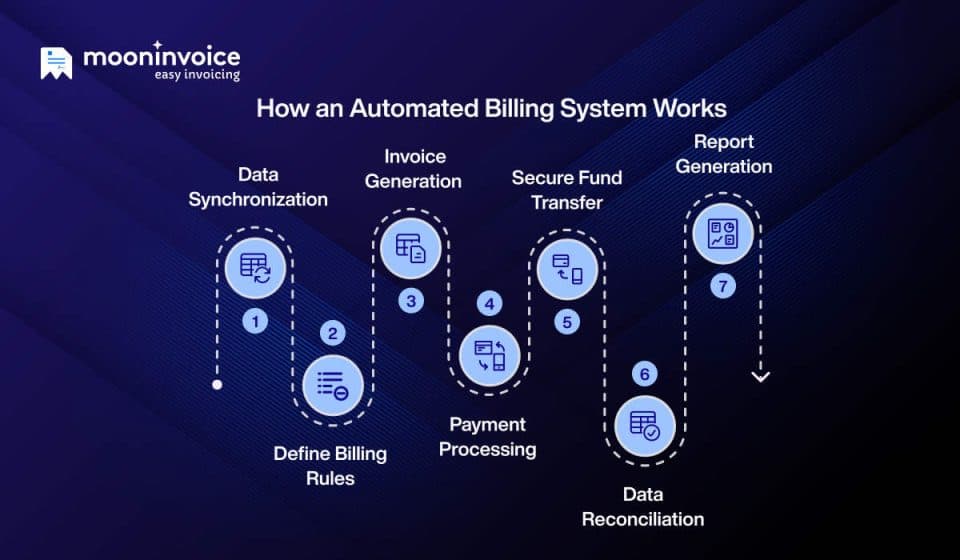
Automated subscription billing workflow (Source: Moon Invoice)
Each department may complete its own task correctly. The difficulty lies in ensuring they all act on the same information.
This problem becomes increasingly common as organizations adopt more specialized business systems. Salesforce's Connectivity Report 2026 found that enterprises now use an average of 957 applications, yet only 27% of them are integrated. That leaves operational teams spending valuable time reconciling inconsistent information instead of serving customers or improving business performance.
The consequence is rarely a dramatic system failure.
Instead, businesses accumulate what could be described as operational debt.
Sales may update the customer's contract immediately. Finance may invoice from another platform. Product teams rely on separate usage data. Customer Success tracks renewals elsewhere. Individually, every system appears accurate. Collectively, they tell different versions of the same customer relationship.
Over time, those inconsistencies become difficult to detect because each team only sees part of the subscription lifecycle.
The operational challenge is therefore not billing accuracy alone.
It is maintaining a single operational reality as customer relationships continue to evolve.
Why Revenue Errors Often Start Behind the Scenes
When subscription metrics fall short, leadership teams often look first at sales performance, churn, or pricing strategy. Those areas certainly matter, but they are not always where recurring revenue problems begin.
In many growing subscription businesses, revenue leakage starts inside operational processes.
A renewal may be delayed because customer status was never updated. An invoice may be generated using outdated pricing rules. A customer's downgrade might be reflected in the CRM but not in the billing platform. Product usage data may arrive after invoices have already been issued, forcing finance teams to make manual adjustments later.
These situations rarely attract immediate attention because each one appears relatively minor.
Collectively, however, they create recurring operational friction that becomes increasingly difficult to manage as customer volume grows.
Recent finance research points to the same underlying challenge. According to CFO.com's coverage of FloQast's Financial Transformation Report, 25% of CFOs report that business data remains siloed across different departments or systems, while another 25% say accessing data still requires excessive manual effort. The report also found that accountants are 2.6 times more likely than CFOs to report insufficient visibility into operational data.
The consequence is not simply slower reporting.
It becomes harder to answer seemingly straightforward business questions:
Which subscriptions are actually active?
Which invoices reflect the latest contract?
Which customers are approaching renewal?
Which usage records have already been billed?
As recurring revenue scales, confidence in financial reporting increasingly depends on operational consistency rather than commercial performance.
In other words, recurring revenue is only as reliable as the workflows supporting it.
Subscription Scale Requires System Coordination, Not More Manual Control
When operational complexity increases, organizations often respond by adding more control mechanisms.
First, another approval step.
Second, another spreadsheet.
Third, another person responsible for checking exceptions.
These solutions feel reasonable because they reduce individual mistakes. Unfortunately, they also increase the number of manual handoffs required for every subscription event.
The problem is not that people cannot perform these tasks.
The problem is that subscription businesses create too many interconnected events for people alone to coordinate efficiently.
This pattern extends beyond subscription operations. According to FloQast Ops product research, more than 70% of controllers say their accounting processes remain largely manual or still require considerable manual effort. As organizations automate one process while leaving upstream and downstream workflows disconnected, finance teams continue waiting for information, chasing approvals, and reconciling inconsistent records.
This explains why operational complexity often grows faster than customer growth.
Adding more people does not eliminate fragmented workflows.
It simply increases the number of participants trying to coordinate fragmented workflows.
A mature SaaS billing system therefore needs to do much more than automate recurring invoices.
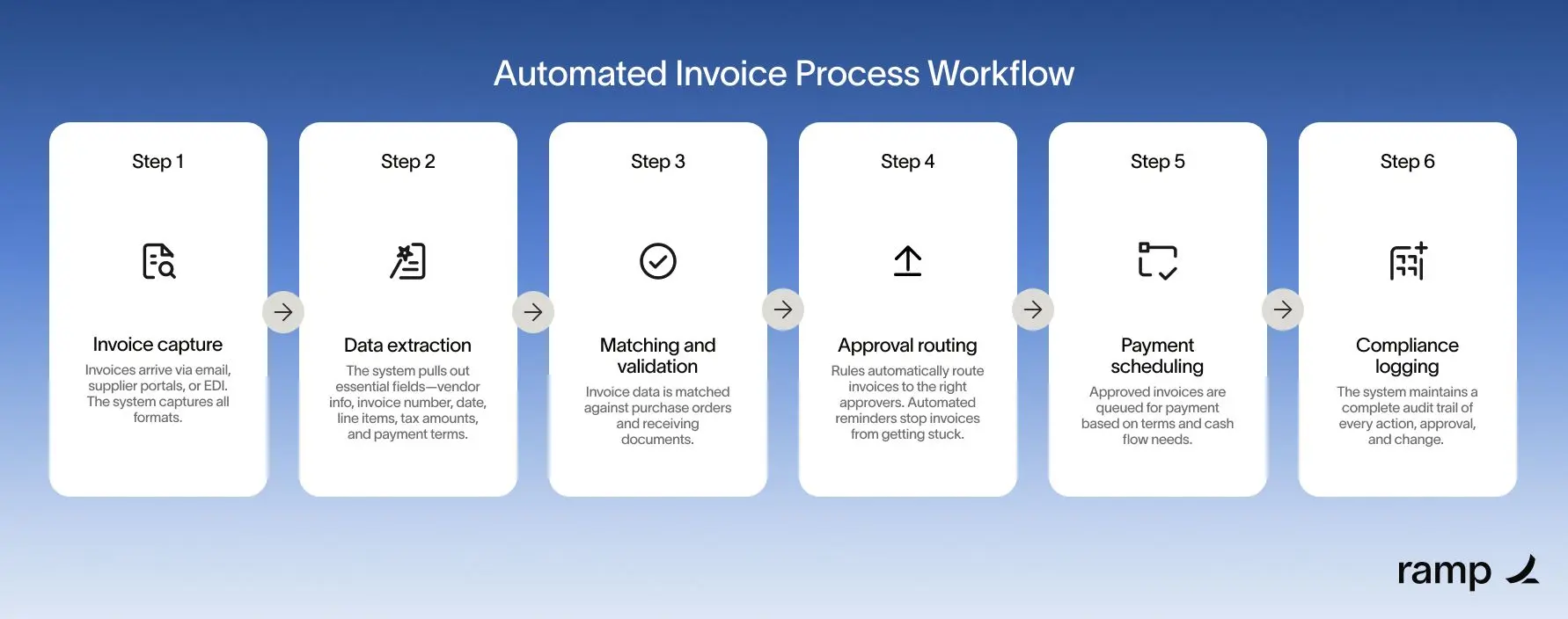
Automated invoice workflow (Source: Ramp)
It should connect the entire subscription operation:
customer records
billing and payments
subscription lifecycle
finance and ERP
product usage
customer support
When every operational event updates a connected system rather than multiple disconnected applications, teams stop reconciling information and start acting on it.
The business becomes easier to manage not because people work harder, but because information moves automatically.
Subscription Management Is Becoming an Enterprise Capability
As subscription models mature, competitive advantage increasingly depends on operational excellence rather than billing execution alone.
The organizations that scale recurring revenue successfully are rarely the ones with the most sophisticated pricing model.
More often, they are the ones that can manage thousands of customer changes without creating thousands of operational exceptions.
That is why subscription management software is evolving into an enterprise capability.
Instead of viewing subscriptions as a finance process, leading organizations treat them as an integrated business operation connecting sales, finance, customer success, support, and ERP.
This shift also reflects how modern billing platforms are evolving. As explained in Paddle's overview of recurring billing software, modern subscription platforms increasingly manage the full lifecycle—including renewals, failed payment recovery, proration, upgrades, downgrades, and revenue recognition—rather than simply generating recurring invoices.
Ultimately, subscription growth is not constrained by billing technology.
It is constrained by how well the business coordinates information after every customer decision.
Twendee helps organizations build that connected operating model by bringing subscription workflows, customer records, finance, approvals, and ERP processes into a single operational platform. Instead of relying on disconnected applications and manual reconciliation, businesses gain a unified view of the entire subscription lifecycle—making recurring revenue more accurate, scalable, and easier to manage as the company grows.
Conclusion
Subscription growth creates new revenue opportunities, but it also exposes hidden back-office problems. As recurring relationships become more dynamic, businesses need more than billing execution. They need connected subscription operations.
Companies that treat subscription management as an enterprise capability are better positioned to scale without increasing operational friction at the same pace.
To build a more connected foundation for subscription growth, Twendee can help centralize billing, renewal workflows, customer data, finance, and operations into one unified ERP system. Visit the Twendee website, follow Twendee on LinkedIn, or book a conversation through Twendee’s Calendly.