

For many businesses, a warranty claim is simply another customer service request. But as organizations grow, warranty claims often reveal something much larger: whether after-sales operations are truly connected.
A single claim may require customer service to verify the purchase, technicians to review repair history, inventory to confirm replacement parts, finance to approve reimbursements, and procurement to coordinate with suppliers. When each team relies on different systems or maintains its own records, delays become inevitable. Customers experience slow responses, while employees spend more time searching for information than resolving the issue itself.
This is why modern warranty management software is no longer just about processing claims more efficiently. Its real value lies in connecting the people, data, and workflows that shape the entire after-sales experience.
Warranty Claims Are Rarely the Real Problem
When warranty costs rise, it is easy to assume that products are failing more often or that claims are becoming more expensive. Sometimes that is true. But in many cases, the hidden cost comes from the way the organization handles those claims.
A customer submits a warranty request and expects a clear answer. Before the business can respond, customer service may need to confirm the purchase record, the service team may need to check repair history, inventory may need to confirm replacement availability, and finance may need to approve reimbursement.
Each step makes sense on its own. The problem starts when every team works from a different source of information.
The customer sees one company. Internally, the business may operate like several disconnected departments.
That is why warranty claims often become more expensive than they appear. The cost is not only the replacement part or technician visit. It also includes repeated checks, manual follow-ups, duplicated data entry, approval delays, and the time employees spend reconstructing context.
According to the Salesforce State of Service Report, 82% of high-performing service organizations use the same CRM platform across service, sales, and marketing. That matters because after-sales service depends on shared customer context, not just faster ticket handling.
Seen this way, warranty claims do not create operational complexity. They reveal whether the business already has the structure to manage complexity across teams.
Warranty Management Slows Down When Information Lives in Different Systems
The warranty workflow itself is usually straightforward.
A customer submits a claim. The business verifies eligibility. A technician reviews the issue. Inventory checks parts or replacement stock. Finance approves costs. The customer receives an update.
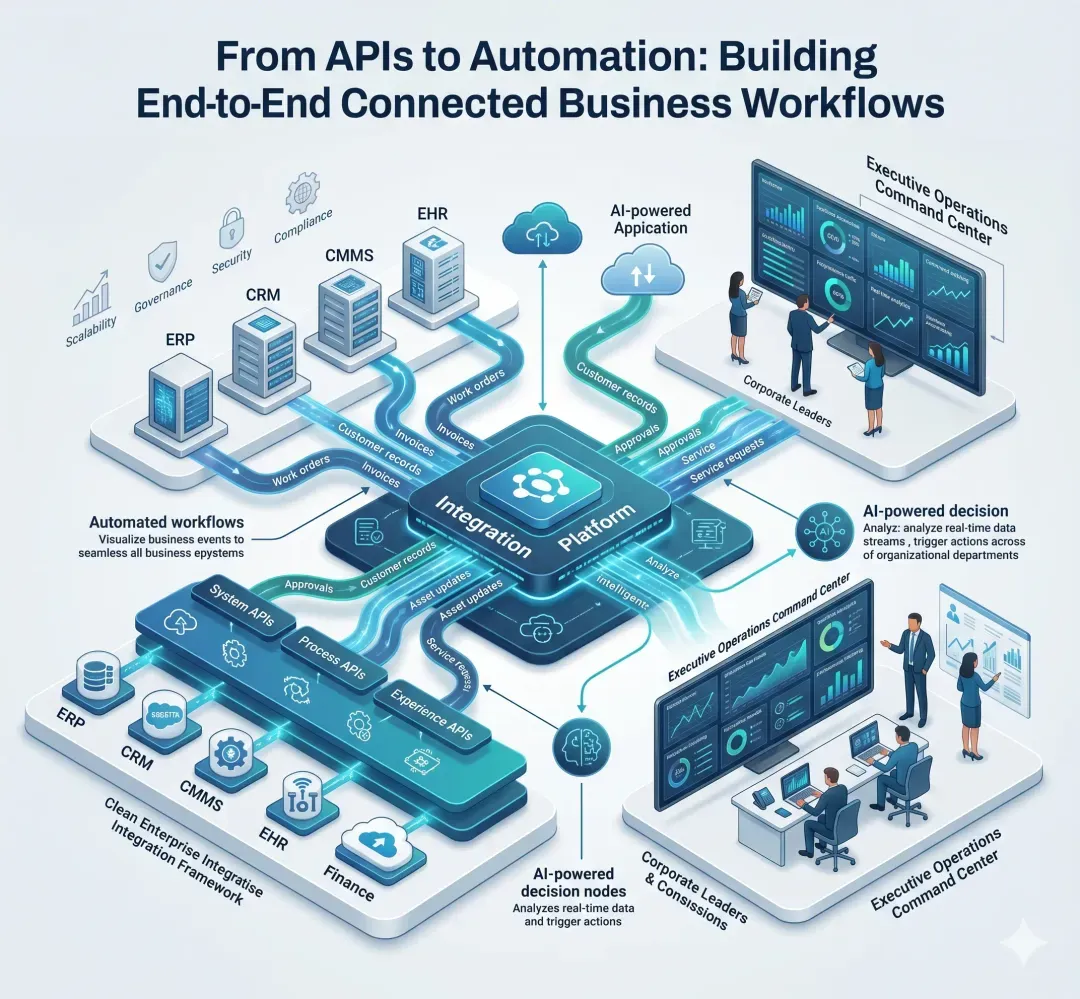
Enterprise integration platform connecting ERP, CRM, finance, and automated workflows for connected business operations. (Source: ConnectorHub)
The challenge is not the sequence of steps. The challenge is the movement of information between those steps.
If eligibility data sits in the CRM, repair notes sit in technician spreadsheets, inventory updates happen in another system, and approvals are handled through email, the process becomes fragile. Every handoff creates another opportunity for delay or misunderstanding.
This problem becomes more visible as organizations adopt more software. The 2025 MuleSoft Connectivity Benchmark Report found that the average enterprise uses 897 applications, but only 29% of them are integrated. MuleSoft also reported that 95% of organizations struggle to integrate data across systems.
Warranty management is one of the places where this lack of integration becomes painful.
Customer service waits for inventory confirmation. Inventory waits for service documentation. Finance waits for complete claim records. Technicians wait for warranty eligibility approval. No team is necessarily doing anything wrong, but the whole process slows down because information does not move smoothly.
When systems cannot communicate, people become the integration layer.
They forward screenshots, check spreadsheets, ask for updates, resend documents, and confirm information that should already be visible. These activities do not improve the customer experience, but they consume time inside every claim.
Warranty Claims Touch More Teams Than Most Companies Realize
Warranty is often viewed as a service department responsibility. In reality, it is a cross-functional operation.
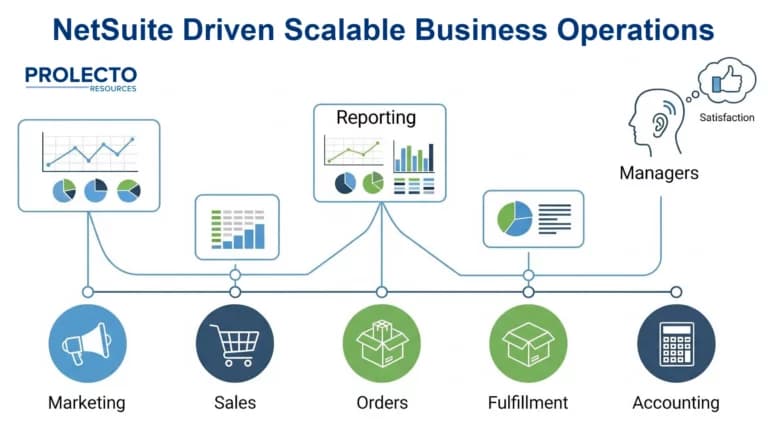
Connected business operations across sales, fulfillment, accounting, reporting, and management. ( Source: Prolecto Resources)
Sales confirms purchase information. Customer support manages communication. Service teams inspect and resolve the issue. Inventory manages replacement parts. Procurement may coordinate with suppliers. Finance records warranty expenses and reimbursements.
Each team owns part of the process. But customers do not judge the experience by department.
They judge whether the company responds clearly, resolves the issue quickly, and keeps them informed.
This is why optimizing one department is not enough. A service team may respond quickly, but the customer still waits if finance approval takes days. Inventory may have the replacement part available, but the case still stalls if eligibility cannot be confirmed. A technician may complete the inspection, but the customer experience still suffers if no one communicates the next step.
High-performing after-sales operations focus on the flow of the entire warranty journey.
A verified example comes from LP Building Solutions’ Syncron warranty case study, where the company implemented a connected warranty platform to streamline claims processing, improve access to analytics, and create end-to-end claims visibility. Syncron reported that LP Building Solutions reduced warranty costs by 15% in the first year of implementation.
The key lesson is not simply that software made claims faster. The bigger value came from connecting warranty processes into one operational environment where teams could work from shared information.
Better Warranty Management Starts With Connected Operations
Many companies try to improve warranty performance by adding more forms, stricter approval steps, or additional documentation requirements.
These measures may improve control, but they do not always improve speed or customer experience.
A disconnected workflow does not become efficient just because it becomes more formal.
If customer service still needs to ask technicians for repair history, if inventory still checks stock manually, or if finance still receives incomplete claim information, the process remains slow. More structure can even make the problem worse if it adds steps without solving the underlying data gap.
Better warranty management starts with a different question:
Is everyone involved in the claim making decisions from the same operational picture?
Connected operations allow teams to verify eligibility, review service history, check inventory, approve costs, update customers, and analyze trends without rebuilding context at every stage.
This matters because warranty performance is not only about resolving individual claims. It is also about learning from them.
When warranty data is connected, leaders can identify:
which products generate the highest warranty costs;
which suppliers contribute to recurring issues;
where claims are delayed most often;
which service actions reduce repeat claims;
how warranty expenses affect margins over time.
Without connected data, these insights remain hidden across spreadsheets, emails, and disconnected systems.
Warranty Management Software Should Support the Entire Service Lifecycle
Modern warranty management software should not function as another standalone claims tool. If it only digitizes forms without connecting the rest of the operation, it solves only part of the problem.
The real value comes when the system supports the full warranty lifecycle.
That includes customer records, product registration, warranty eligibility, claim submission, technician inspection, inventory availability, supplier recovery, approval workflows, reimbursement tracking, customer communication, and reporting.
When these functions are connected, teams no longer need to rebuild the story behind every claim. They can see what happened, what needs to happen next, who is responsible, and where the case stands.
This creates value in three ways.
First, it reduces operational friction. Employees spend less time searching for information and more time resolving claims.
Second, it improves customer experience. Customers receive clearer updates because internal teams have better visibility.
Third, it turns warranty data into business intelligence. Claims become a source of insight into product quality, supplier performance, service efficiency, and recurring operational risks.
IBM makes a similar point in its Warranty Analytics framework, which explains that warranty-related data from across the enterprise can help organizations understand where defects occur, why they happen, and whether fraud may be affecting claims.
In other words, warranty data should not stay trapped inside service records. It should help the business improve products, suppliers, processes, and customer relationships.
Conclusion
Warranty claims rarely expose product issues alone. More often, they reveal how effectively a company coordinates information across sales, customer service, service teams, inventory, procurement, finance, and management.
As businesses grow, this coordination becomes more important. A process that worked informally in a smaller organization can become slow and fragmented when more teams, systems, and approval layers are involved.
Connected warranty management helps companies move beyond reactive claim handling. It gives teams a shared operational view, reduces manual coordination, improves visibility, and turns after-sales service into a stronger source of business insight.
At Twendee, we build warranty management software that connects claims, customer records, service history, inventory, approval workflows, reporting, and after-sales operations within one operational platform. Visit the Twendee website, follow Twendee on LinkedIn, or book a conversation through Twendee’s Calendly.
