

AI-assisted development has dramatically changed how fast teams can ship software. Features appear quickly, prototypes are built in days, and early traction becomes easier to demonstrate. This shift has popularized vibe coding, a style of development where speed is driven by AI prompts and rapid iteration rather than deliberate system design.
However, this acceleration hides a structural trade-off. Vibe coding development speed is often achieved by deferring architectural decisions, which leads to higher maintenance overhead and refactoring cost as systems mature. The conflict is not about whether AI improves productivity. It is about how that productivity is financed over time.
Development Speed Without Structure
Vibe coding increases development speed primarily by removing early coordination constraints. Teams no longer need to fully agree on domain boundaries, data contracts, or extensibility assumptions before writing code. Instead of aligning on architecture first, AI fills in missing decisions at the implementation layer, generating code that satisfies immediate functional intent.
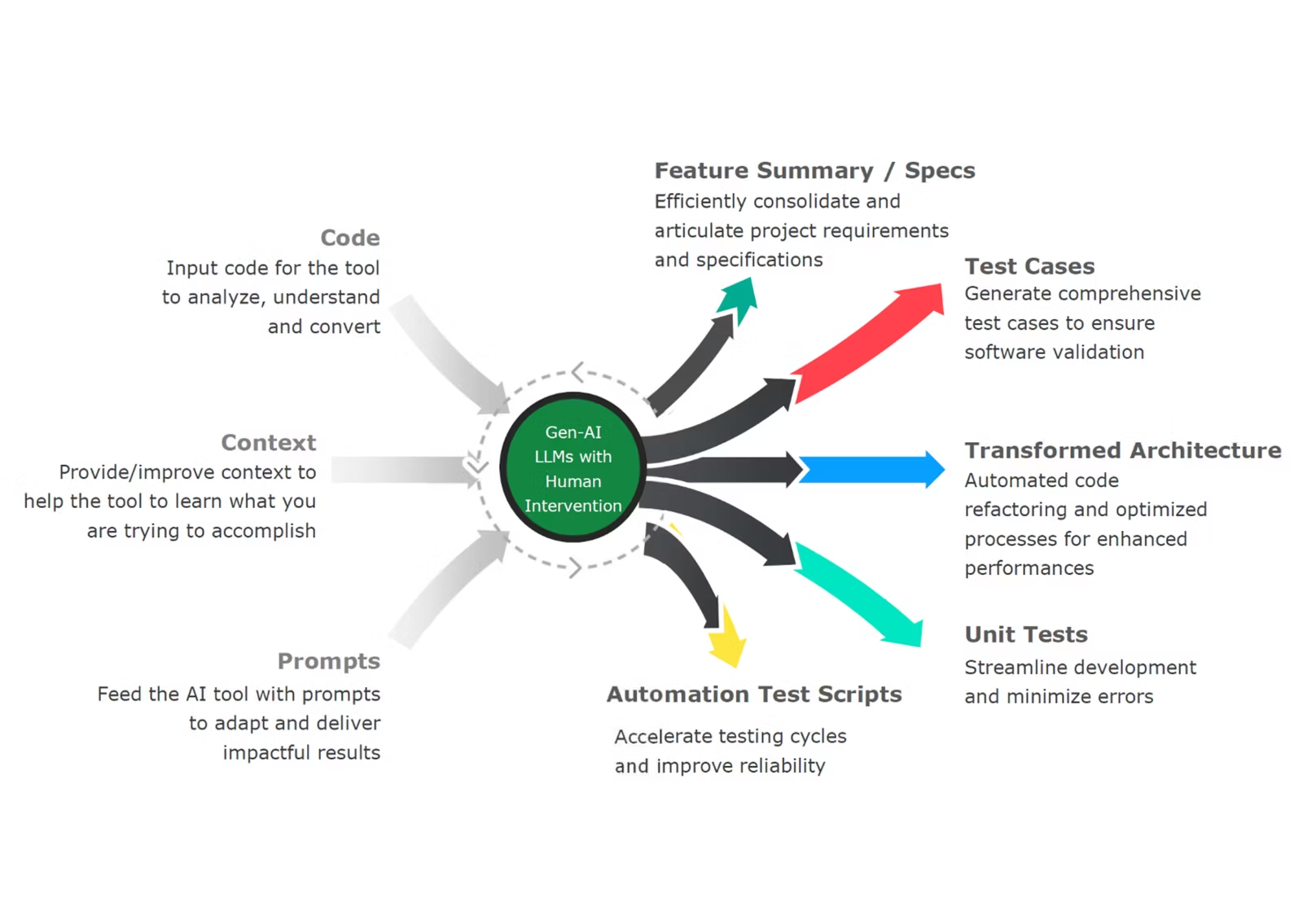
AI-assisted software development workflow showing rapid code generation and compressed delivery stages without explicit architecture layers (Source: Publicis Sapient)
This shift produces measurable short-term gains. According to McKinsey’s analysis on generative AI in software engineering, teams adopting AI-assisted coding report 20–45% productivity improvements in activities such as feature scaffolding, boilerplate generation, and repetitive logic implementation. These gains are most pronounced in early-stage products or greenfield components where architectural coupling remains low and change cost is still manageable.
However, the mechanism behind this speed is not increased clarity. It is a decision deferral. Architectural questions are not eliminated. They are embedded implicitly inside generated code. Data ownership assumptions, error propagation logic, and dependency boundaries are resolved locally by the model rather than globally by the team. As a result, decisions that traditionally existed as shared agreements now exist as dispersed implementation artifacts.
This distinction matters because software complexity is cumulative and non-linear. Research on large-scale engineering organizations has shown that when systems grow without explicit ownership and structural alignment, coordination cost rises faster than feature output. Google’s long-running work on engineering productivity and organizational effectiveness highlights that teams lacking clear boundaries experience increasing friction as codebases scale, even when individual developer output remains high.
AI amplifies this imbalance. Code volume increases rapidly, but shared understanding does not scale at the same rate. The system becomes larger faster than it becomes more understandable. A recurring real-world pattern appears across AI-accelerated teams:
Early releases ship significantly faster than planned
Feature velocity remains high for multiple iterations
Small changes begin to cause unexpected side effects
Engineers slow down intentionally to avoid breaking hidden dependencies
At this stage, development speed collapses not because AI stops working, but because the system can no longer absorb change safely. Teams move cautiously, not slowly. Every modification requires defensive testing and informal knowledge checks. This phenomenon aligns with established findings in software economics. Studies on technical debt accumulation show that deferring design decisions increases future modification cost disproportionately. What vibe coding changes is the rate at which deferred decisions accumulate, not the nature of the trade-off itself.
Maintainability Becomes the Real Cost After the First Release
Maintainability rarely shows up in the first release cycle. It shows up in the fifth, the tenth, and every release after that. This is not anecdotal. Industry-wide software lifecycle studies under ISO/IEC standards consistently show that maintenance accounts for roughly 60–80% of total long-term software cost, especially in systems that evolve over multiple years. When software is built quickly without architectural coherence, that ratio tends to skew even higher, as teams spend increasing effort stabilizing existing behavior rather than delivering new value.
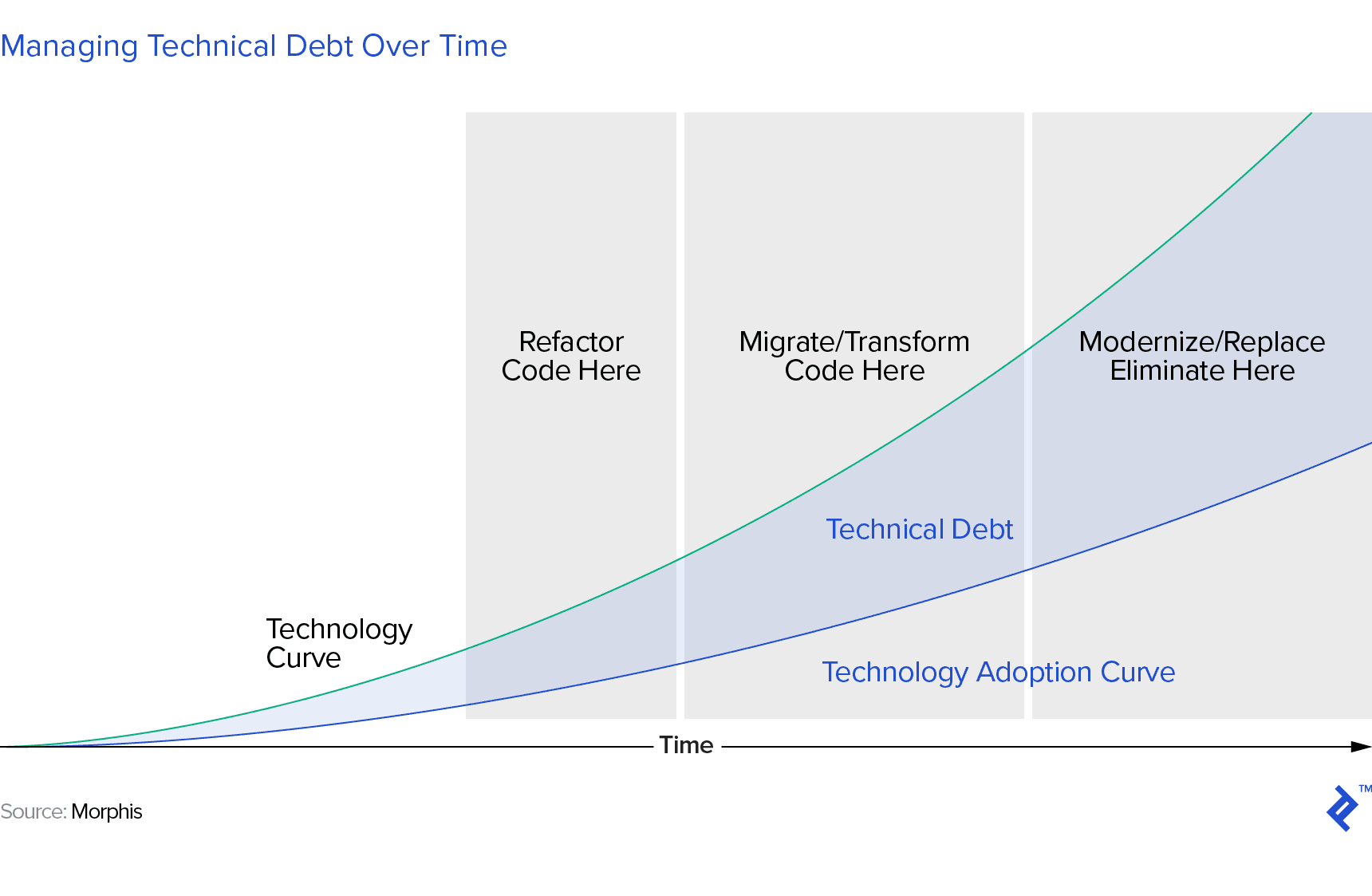
Graph showing technical debt accumulation over time with refactoring and modernization cost increasing as software evolves (Source:Toptal’s analysis)
AI-assisted development intensifies this dynamic in subtle but predictable ways. Generated code optimizes for immediate correctness, not long-term consistency. Over time, similar functionality is implemented differently across features, error-handling patterns diverge, and core business rules become scattered instead of centralized. None of these issues are catastrophic in isolation. Together, they increase the cognitive load required to make even small changes, turning routine updates into risk-sensitive operations.
This pattern has played out across many SaaS companies that aggressively adopted AI-assisted coding during 2023–2024. MVPs shipped faster, but as products entered Series A scaling or enterprise onboarding phases, teams were forced into broad refactoring cycles to meet security, compliance, and reliability expectations. Gartner’s research on software engineering productivity describes this moment as a productivity reversal, where organizations that delay architectural governance often see maintenance and stabilization work overtake feature development within 12–18 months. At that point, maintainability debt stops being an abstract concern and becomes an operational risk. Onboarding slows, knowledge concentrates in a small group of engineers, and release cadence shifts from confident to cautious.
For systems expected to support audits, integrations, or multi-team ownership, maintainability cannot be inferred from working code alone. It must be designed deliberately. Speed may get a product to market, but maintainability determines whether it can stay there.
Refactoring Cost Becomes the Real Price of AI-Driven Speed
In vibe coding environments, refactoring rarely feels urgent at the beginning. The system is small, AI-generated code is easy to modify, and early delivery speed creates confidence that structural issues can be fixed later. That confidence is often misplaced. As the system grows, refactoring stops being a cleanup task and becomes a structural correction. The cost curve changes fast and steep. The key dynamics behind this shift are consistent across AI-heavy teams:
Refactoring cost escalates rapidly at scale: Evidence from Google’s engineering productivity research shows that large-scale refactoring efforts can consume 30–50% of total engineering capacity during critical growth phases. These are not optional optimizations. They are forced responses to scaling pressure such as team expansion, production incidents, or enterprise requirements.
AI-driven speed increases code volume faster than architectural understanding: Vibe coding accelerates implementation, but architectural intent remains implicit. Generated code often embeds local assumptions about data shape, execution flow, and ownership. As volume grows, these assumptions collide, turning small changes into system-wide risks.
Deferred structure turns refactoring into an organizational problem: Research on socio-technical system boundaries shows that when architecture does not align with team ownership, coordination cost rises faster than feature output. Teams slow down not because of tooling limits, but because every change requires extensive impact analysis.
Maintenance and refactoring crowd out feature delivery: According to industry research on software lifecycle cost, maintenance already accounts for the majority of long-term software spending. In vibe-coded systems, this burden intensifies as duplicated logic, inconsistent abstractions, and unclear boundaries increase the effort needed to ship safely.
Technical debt compounds silently, then surfaces abruptly: As outlined in Martin Fowler’s work on technical debt, deferred design decisions behave like financial debt. Interest accumulates quietly. When repayment becomes unavoidable, it demands focused engineering time, disrupts roadmaps, and slows hiring leverage.
Long-term scalability becomes constrained, not enabled: Systems built for speed without structure struggle to support parallel work. Adding more engineers increases friction instead of throughput. Delivery velocity drops even though AI tooling remains available.
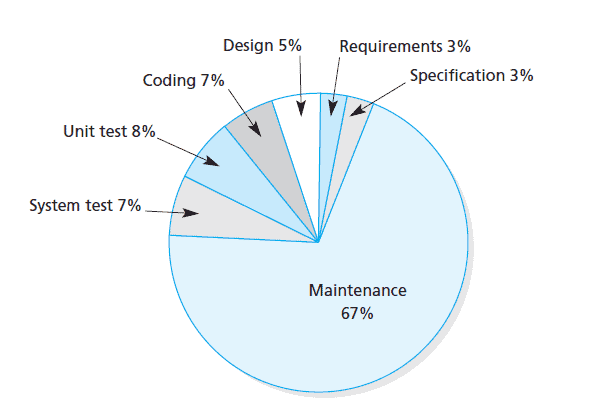
pie chart showing software maintenance cost dominating total development lifecycle cost, illustrating refactoring and maintenance expense (Source: 4mation.com.au)
In practice, balancing AI-driven development speed with long-term maintainability requires more than stricter coding standards or better tools. What teams need are structural guardrails that allow rapid execution without deferring critical architectural decisions. Without those guardrails, refactoring stops being a routine improvement and becomes a forced correction triggered by scale, compliance pressure, or organizational growth.
This is where Twendee typically engages engineering teams. Rather than slowing delivery, Twendee focuses on modular architecture and realistic technical roadmaps that absorb AI-assisted speed while keeping refactoring cost predictable. By making architectural intent explicit early and aligning system boundaries with how teams actually work, development speed remains sustainable instead of collapsing under its own complexity.
Conclusion
Vibe coding highlights a structural truth that many teams only confront after initial success. AI-driven development speed is real, measurable, and valuable. But when speed is achieved by deferring architectural intent, the cost does not disappear. It accumulates quietly in the form of maintainability debt and eventually surfaces as large-scale refactoring, slowed delivery, and constrained scalability.
The trade-off is not between speed and quality. It is between unstructured speed that collapses under growth and governed speed that compounds over time. Organizations that sustain velocity treat architecture as an enabler rather than an afterthought. They allow AI to accelerate implementation while ensuring system boundaries, ownership, and evolution paths remain explicit.
This is the problem space where Twendee typically works with engineering leaders. By designing modular architectures and realistic technical roadmaps, Twendee helps teams absorb AI-driven development speed without pushing refactoring and maintenance costs into a future crisis. The goal is not to slow teams down, but to make speed sustainable as systems, teams, and business demands scale. If AI is accelerating your delivery today, the real question is whether your architecture is prepared to carry that speed tomorrow. Stay connected with us via Facebook, X, and LinkedIn.
Read our latest blog here: What Businesses Expect from Technology Partners in 2026
