
Digital transformation is now shaping how schools operate, teach and evaluate. But while the tools evolve fast, one issue remains unchanged: many institutions still choose the wrong partner for edtech development. And the cost is real delays, broken workflows, data vulnerabilities and platforms that simply don’t match how teachers actually work. As LMS platforms grow more complex with AI, analytics and multi-system integrations, the margin for error gets smaller. This article breaks down the five critical mistakes schools make when selecting a technology partner and how to avoid them with a strategic, future-proof approach.
1. Overlooking Core Requirements
One of the most common reasons school technology projects fail is straightforward: the core requirements were never clearly defined. As LMS platforms adopt AI-driven features, richer analytics and more complex academic workflows, even small ambiguities can quickly turn into system-wide misalignment. When schools provide only high-level descriptions, vendors are forced to make assumptions often the wrong ones.
According to implementation reviews across K–12 and higher education, a significant portion of LMS delays stem from unclear or shifting requirements. This happens not because schools lack direction, but because educational operations contain far more nuances than expected. Attendance rules differ by program, grading structures depend on curriculum, and parent communication follows its own logic. Missing just one of these elements can derail an entire module.
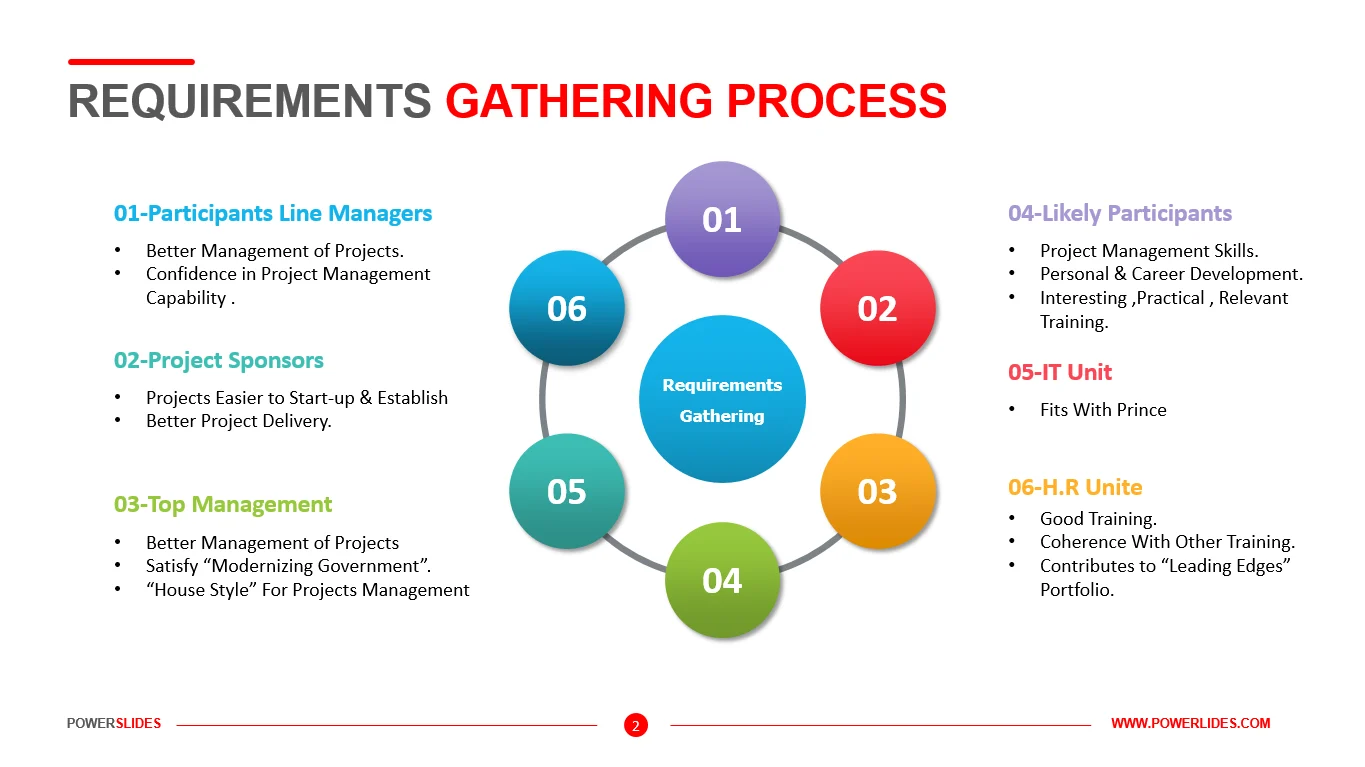
Requirements gathering workflow for school LMS projects (Source: PowerSlides)
A realistic scenario: A bilingual school in Southeast Asia commissioned an LMS with attendance, gradebook and analytics but never clarified two critical points: teachers record attendance per class session, not daily, and the gradebook must calculate dual-curriculum weightings. During UAT, the system produced incorrect scores for nearly 300 students, forcing a rollback and several weeks of redevelopment. The problem was not technical capability, it was incomplete requirements.
Why requirements matter more than schools expect: Modern LMS platforms integrate AI-powered recommendations, real-time dashboards, parent–school channels, mobile-first interfaces, multi-program structures and API-based connections to SIS, payment systems and assessment tools. Each layer introduces data rules and workflow dependencies that must be defined early. Without this clarity, systems become rigid, inconsistent or unable to scale with the school’s long-term model.
A better approach for schools: Schools should document workflows in detail, define user roles clearly, prioritize use cases and align early on reporting and integration needs. Validating assumptions with teachers and coordinators ensures the system reflects real operations, not theoretical models. A strong requirements foundation determines whether the final platform becomes a long-term asset or an ongoing operational burden.
Twendee works closely with academic teams to translate real teaching scenarios into precise technical specifications. This collaboration shapes a clear, practical roadmap and eliminates ambiguities that often derail LMS projects. By grounding system design in actual classroom practice, Twendee helps schools avoid costly rework and ensures their platforms can grow in sync with their educational model.
2. Selecting Vendors Without True LMS Platform Expertise
One of the most costly mistakes schools make is assuming that any software vendor can build an LMS. Technical skill alone is not enough. Without understanding how schools operate the rhythms of academic calendars, the structure of grading policies, the logic of attendance, the dynamics of teacher workflows, vendors often design platforms that appear functional but fail in day-to-day teaching.
Across many LMS and SIS implementations, schools report that misalignment between vendor assumptions and real academic workflows is a leading cause of rework and user frustration. This isn’t a coding problem. It’s a domain-knowledge problem. Education has its own rules, exceptions, and edge cases. When vendors do not recognize these nuances, the system inevitably breaks at the operational level, where teachers feel the impact most.
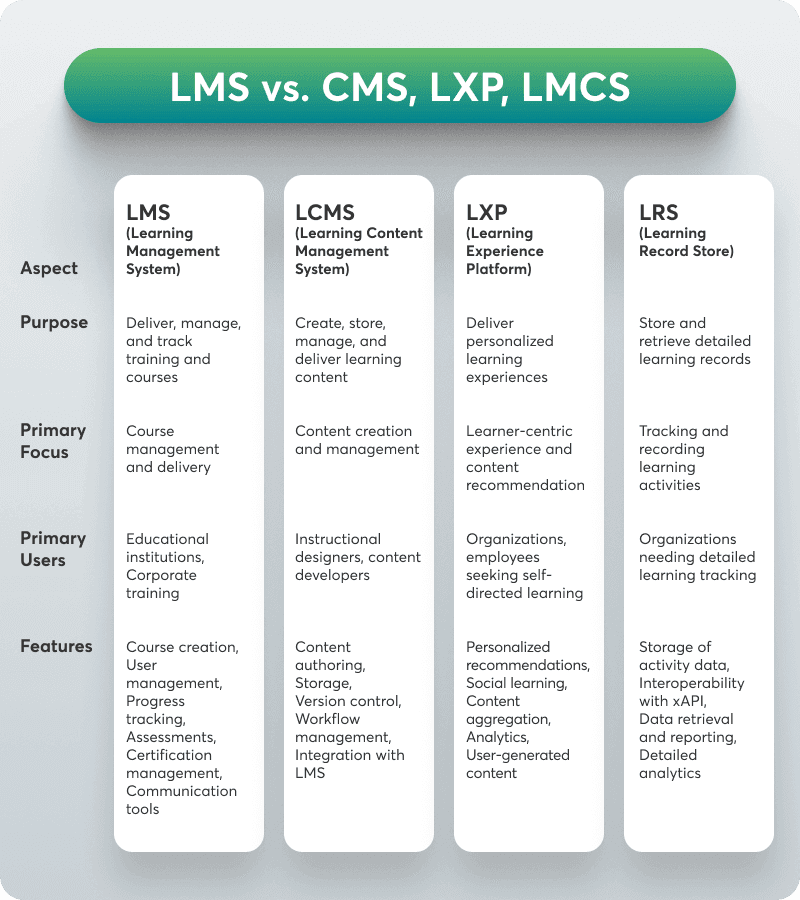
Comparison of LMS, CMS, LXP and LRS platforms to illustrate the complexity of EdTech systems and why vendors need domain expertise (LearnWords).
A realistic scenario: A private school hired a generalist software team to build their LMS. The vendor created a “flexible gradebook” requiring teachers to manually enter weightings for every assignment. It sounded powerful but completely contradicted the school’s standardized assessment model. Within weeks, inconsistencies appeared across classes, the academic office flagged dozens of mismatched grade summaries, and teachers lost confidence in the system. Fixing this required redesigning the entire grading logic and retraining staff. The issue wasn’t technical ability; it was a lack of LMS-specific expertise.
Why vendor expertise matters more than schools expect: Generalist vendors usually design LMS workflows like business apps: linear, content-centric and role-light. But education is cyclical and multi-layered. One attendance rule can change by grade or program. One grading formula can determine promotion eligibility. One reporting error can damage parent trust. With today’s LMS platforms integrating dynamic timetables, multi-campus operations, real-time analytics, AI-based recommendations and compliance dashboards, a vendor without deep edtech experience often delivers a system that is technically correct but pedagogically incompatible.
A better approach for schools: Schools should evaluate vendors based on edtech fluency, not just portfolio size. This includes confirming their understanding of assessment cycles, multi-role permissions, timetable logic, student-parent communication flows, and LMS–SIS integration. A vendor with proven domain expertise can anticipate edge cases before they become problems, design workflows that teachers naturally adopt, and reduce the rework that drains both time and budget.
Twendee’s development teams specialize in LMS and education platforms, working directly with academic offices to map real grading structures, attendance flows, program variations and reporting cycles before development begins. This alignment enables Twendee to build systems that reflect actual school operations, reducing misinterpretation, improving teacher adoption and ensuring the platform supports learning rather than complicating it.
3. Underestimating Data Security Risks
Schools often assume that security is “handled automatically” when deploying an LMS or student portal. But in reality, education systems hold some of the most sensitive data of any sector: student identities, parent contact details, academic results, behavioral notes, health records and payment information. When integrating LMS platforms with SIS, payment gateways, attendance tools or analytics dashboards, even small configuration mistakes can expose thousands of records.
Many institutions only realize the risk when an integration fails and data becomes duplicated, corrupted or accessible to the wrong roles. In today’s increasingly interconnected edtech ecosystem, security is no longer a backend issue, it is a core operational requirement.
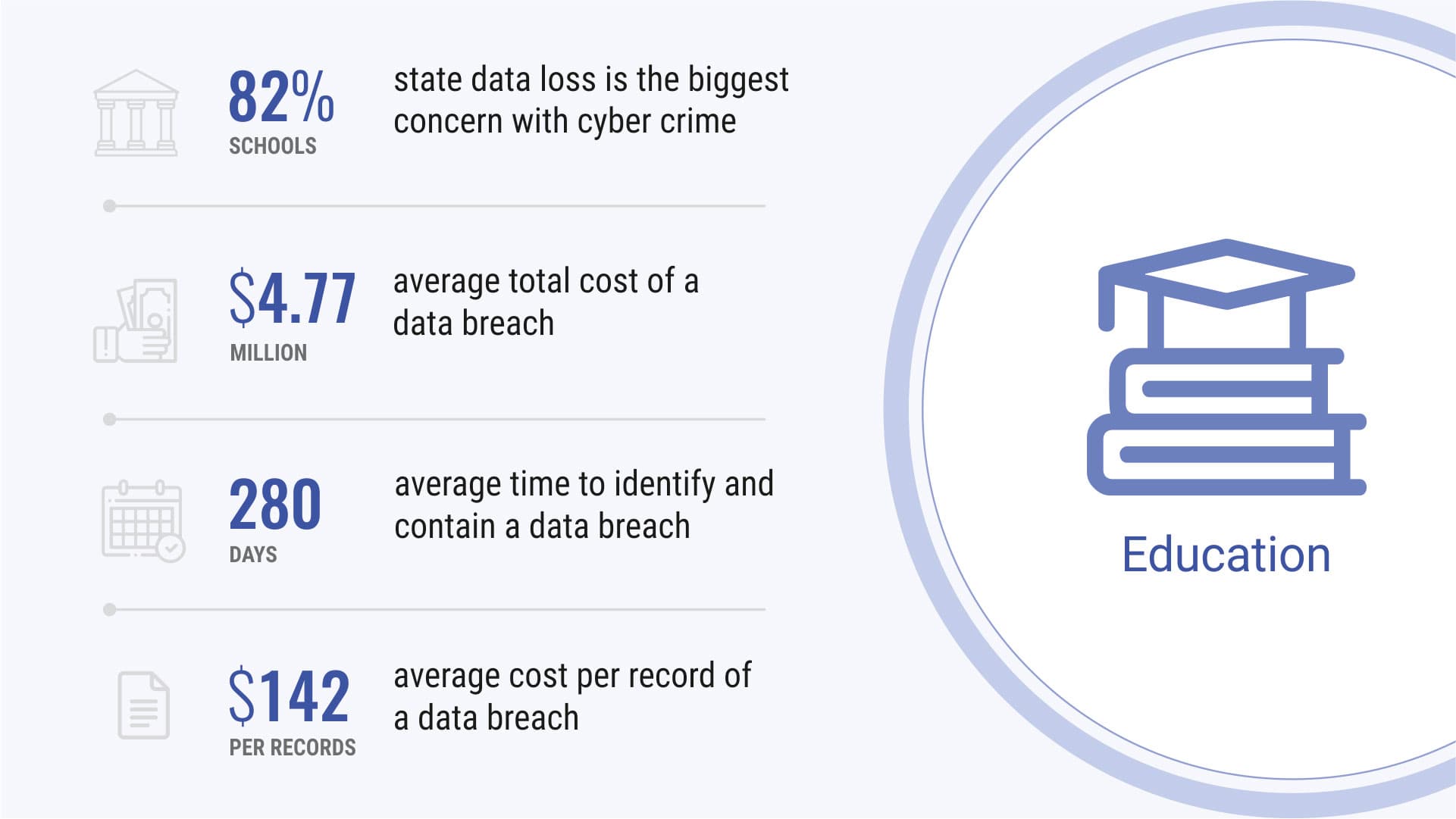
Education sector data breach statistics showing high cost, long detection time and rising cyber risks in schools (Source: IBM / industry reports).
A realistic scenario: A school introduced a new LMS that needed to sync attendance and grade data with their SIS. The vendor created the integration but failed to restrict API access by user role. As a result, parent accounts could indirectly query endpoints intended only for administrators. No data breach occurred, but the discovery made during an internal audit forced the school to shut down the integration for three weeks, rework permissions, and revalidate all data flows. The incident highlighted how a single overlooked rule in data access can compromise an entire system’s integrity.
Why security matters more than schools expect: Education environments produce continuous streams of personally identifiable data. When LMS platforms integrate with payment tools, exam systems, CRM portals or third-party apps, the attack surface expands rapidly. Unsecured APIs can expose student profiles. Weak session management can allow unauthorized access. Missing audit logs make it impossible to trace who viewed or modified academic records.
A better approach for schools: Schools should prioritize partners who treat security as part of system design, not an afterthought. This includes verifying encryption standards, authentication logic, API protections, permission boundaries, audit logging and backup policies. Clear data mapping between LMS and SIS helps prevent accidental overwrites or unauthorized exposure. Regular code reviews and security testing ensure the system can withstand both predictable and unexpected usage patterns.
Twendee integrates security review into every development stage, from architecture to deployment. The team applies rigorous testing against common vulnerabilities, implements role-based permissions with strict boundaries, and audits integration points to ensure data flows remain secure and compliant. By designing systems that protect student information at the core, Twendee helps schools avoid operational disruptions and build trust across their entire academic community.
4. Treating LMS Integration as a Simple Add-On
Many schools approach LMS projects with the assumption that integration is a plug-and-play step something handled near the end of development. In reality, integration is the backbone of the entire edtech ecosystem. When LMS platforms must sync with SIS, payment gateways, attendance tools, assessment systems or communication apps, even a minor mismatch in data rules can break operations across multiple departments.
Integration failures rarely look dramatic at first. They often appear as duplicated records, missing grades, inconsistent attendance logs or parent accounts that don’t sync correctly. But beneath those symptoms is a deeper architectural issue: the school did not define a unified source of truth or a consistent data model before development began.
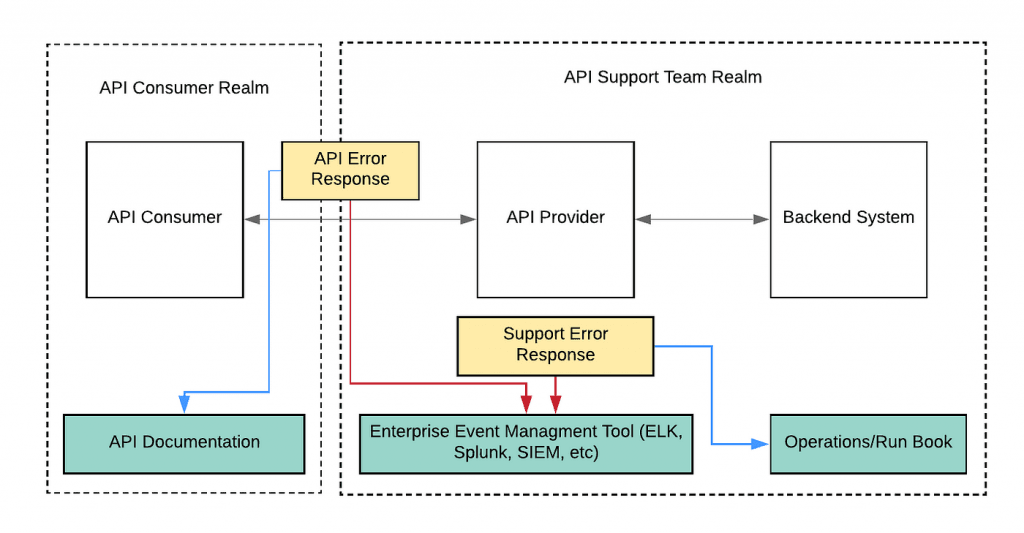
API error handling flow between consumer, provider, and support team (Source: API integration documentation)
A realistic scenario: A school deployed an LMS that had to sync class enrollment data with their SIS. Because the integration was added late, two systems used different identifiers for student groups. As a result, hundreds of timetable entries failed to map correctly. Teachers could not access updated class lists, parents received incomplete schedules, and the academic office spent days reconciling mismatched data. The problem wasn’t the integration itself, it was the lack of planning around how data flows between systems.
Why integration is more complex than schools expect: Academic systems operate with intertwined dependencies. A change in timetable logic affects attendance. A misaligned grade formula affects reporting. An incomplete parent record affects communication. When LMS integrations are not architected from the beginning, these dependencies become fragile. Modern LMS environments also introduce added complexity: multi-campus structures, mobile access, analytics dashboards and event-driven data pipelines all of which require consistent, predictable data exchanges.
A better approach for schools: Schools should treat integration as a core architectural decision, not a final-step task. This means defining data ownership, mapping data structures early, aligning identifiers, validating use cases across departments and stress-testing synchronization under peak load. Proper planning ensures that integrations remain stable, scalable and resilient as the school’s academic model evolves.
LMS integration is never just a technical connection; it is the structural glue that holds the school’s digital ecosystem together. When treated lightly, minor inconsistencies cascade into academic disruption. When treated strategically, integration becomes the foundation that enables reliable operations, accurate reporting and long-term digital growth.
5. Choosing the Cheapest Vendor
Budget constraints are real for many institutions, but choosing a vendor solely because they offer the lowest cost is one of the most damaging decisions a school can make. Low-cost providers often rely on junior resources, lack domain expertise, skip quality assurance steps or deliver fragile architectures that cannot support long-term growth. The result may look cost-effective in the beginning, but the hidden costs surface quickly.
Cheap solutions often fail during high-pressure academic moments: exam weeks, reporting cycles or parent communication periods. When a platform slows down, miscalculates grades or crashes under load, the operational impact is immediate and the cost of emergency fixes, manual workarounds and user distrust far exceeds the initial “savings.”
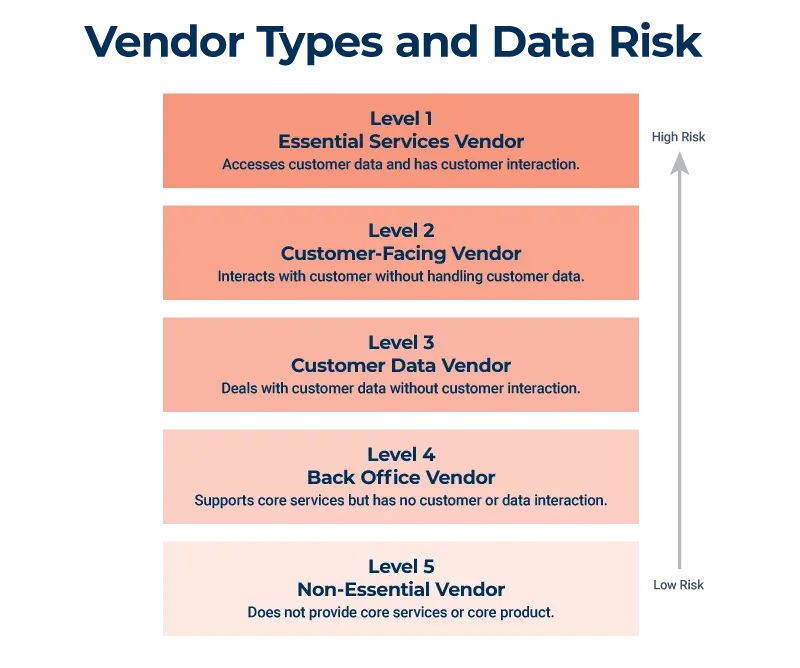
Vendor risk levels from essential to non-essential (source)
A realistic scenario: A school selected the lowest-price vendor to build their LMS. The system worked during testing but stalled during exam season when thousands of grade entries were submitted simultaneously. Teachers were locked out, grade submissions corrupted and several classes had to redo assessments. The vendor requested additional fees to “optimize the system,” turning a budget-friendly project into an expensive recovery effort.
Why cheap often becomes expensive: Low-cost proposals typically minimize architecture planning, scalability considerations or QA cycles. These shortcuts rarely appear during early demos but they surface the moment real academic volume hits. A platform that cannot handle concurrency, large datasets or heavy reporting loads becomes a liability. The school pays again: in rework, in downtime and in declining teacher adoption.
A better approach for schools: Schools should evaluate total cost of ownership, not just upfront pricing. This includes long-term maintenance, scalability, upgrade readiness, quality of documentation, support processes and the vendor’s ability to anticipate educational edge cases. A sustainable partner may cost more initially but delivers stability, reliability and confidence during high-stakes academic periods when failure is not an option.
The cheapest proposal often becomes the most expensive mistake. Sustainable partnerships, not short-term savings, are what protect academic continuity. When schools prioritize reliability and long-term capability over price alone, they safeguard their operations, their teachers’ trust and their students’ learning experience.
Conclusion
Selecting the right tech partner can define the success or failure of a school’s edtech transformation. The most common mistakes: unclear requirements, poor vendor selection, weak security, inadequate integrations and price-driven decisions lead to incomplete features, operational disruption and data risks.
By prioritizing expertise, structured requirements, secure integrations and scalable architectures, schools can implement LMS platforms and learning systems that truly support students and educators.
For institutions seeking a strategic technology partner, Twendee offers experienced edtech development teams, clear roadmaps, robust security testing and scalable system architecture designed to support long-term growth and real educational impact. Stay connected via Facebook, X, and LinkedIn.
Read our latest blog: Banking App Performance: How to Reduce Latency Under Heavy Transactions