
A customer pays three invoices in one transfer, deducts a disputed charge and sends remittance details in a separate email. The money has reached the company’s bank account, but the finance team still needs to work out which invoices have been settled and what remains outstanding.
That gap between receiving payment and clearing the right invoices is where cash application automation can make a practical difference. By connecting bank transactions, remittance information, invoices and customer records, it helps accounts receivable teams apply cash faster and give the business a more reliable view of what customers still owe.
Why receiving the money does not clear the invoice
Cash application is the accounts receivable process of matching incoming customer payments to outstanding invoices and recording the result. It is distinct from accounts payable, which handles a company’s own payments to suppliers.
The process can be straightforward when one customer pays one invoice and includes a clear reference. It becomes harder when a payment covers multiple invoices, arrives without remittance details or includes deductions, short payments or disputed charges. Teams may need to compare bank statements with customer emails, payment portals, spreadsheets and records in the finance system before they can determine what the payment covers.
Until that work is complete, the company has received the cash but may still show the invoice as unpaid. That can distort the receivables balance, trigger unnecessary collection reminders and make it harder for finance leaders to understand which amounts are genuinely overdue.
The workload remains significant. In BillingPlatform’s 2025 accounts receivable survey, 86% of respondents described cash application as fully manual, mostly manual or partially automated. Only about 14% said the process was mostly or fully automated. The findings suggest that many finance teams still rely on people to resolve mismatches, even when other parts of the receivables process have been digitized. get.billingplatform.com
For businesses operating in Vietnam, the issue is also connected to late payment and working capital. Atradius’s 2025 survey found that overdue payments affected 39% of B2B invoices among the Vietnamese companies surveyed. When finance teams cannot quickly identify which invoices a payment settles, they may spend time following up on balances that have already been paid or delay action on balances that remain open.atradius.de
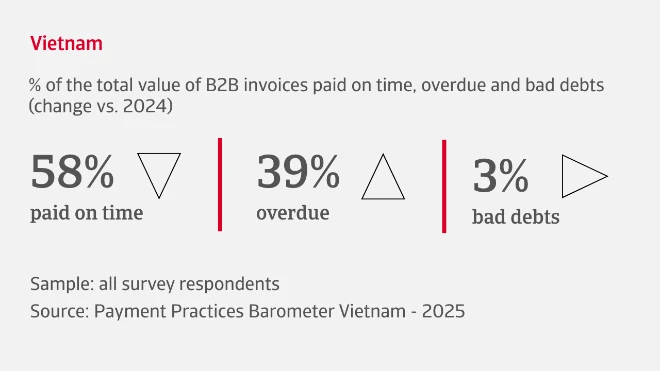
The status of B2B invoice value in Vietnam in 2025: 58% paid on time, 39% overdue and 3% classified as bad debt. (Source: Atradius)
Automation helps by bringing payment information and receivables records together. A system can read payment references and remittance files, compare them with open invoices, then record clear matches automatically. When the information is incomplete or inconsistent, it can flag the case for review rather than treating an uncertain match as confirmed.
What effective cash application automation should improve
The value of automation depends on the quality of the full process, from receiving payment data to updating the accounts receivable record. Automating only the first step, such as extracting data from a bank statement, can leave finance teams with the same manual work in a different place.
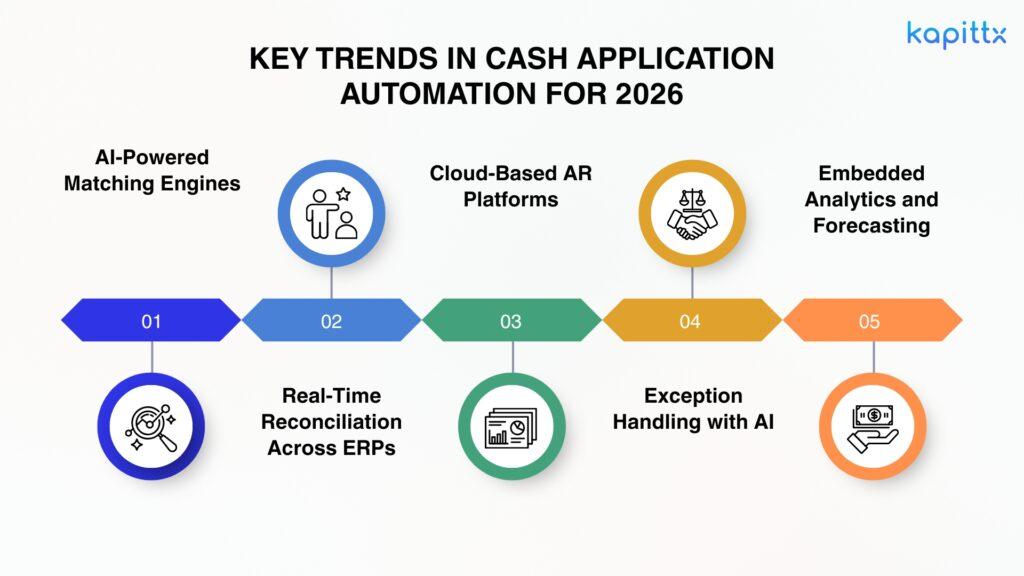
Cash application works best as part of a connected receivables process, where payment data, invoice records and exception handling support one another. (Source: Kapittx)
A useful workflow should connect four records: the bank transaction, remittance information, customer account and open invoice. It should then apply matching rules, identify exceptions and send confirmed results back to the finance system. This creates a traceable link between the payment received and the invoice it settles.
That workflow can improve several parts of receivables operations:
Apply straightforward payments sooner. When the customer, amount and invoice reference align, automation can match the payment and update the invoice without waiting for someone to compare records manually.
Reduce time spent on exceptions. A payment that does not match cleanly should be routed with the relevant details attached: possible invoices, amount differences, missing remittance data or a potential deduction. Staff can focus on resolving the ambiguity instead of gathering information from multiple systems.
Give collections teams a more accurate picture. Once a payment is applied, the invoice status should update promptly. That helps prevent avoidable reminders and lets the team focus on balances that are still unpaid.
Improve cash visibility and reporting. Finance leaders need to distinguish between cash received, cash applied and cash that remains unapplied. Reporting these as separate measures makes it easier to spot process delays and understand the state of receivables.
The metrics should reflect those outcomes. A high automatic match rate is useful, but it does not show whether the system is matching the correct invoices. Finance teams should also monitor exception volume, unapplied cash, time from receipt to posting, same-day application and the number of matches later corrected.
The Hackett Group’s 2025 evaluation of cash application software providers reported a median automatic match rate of 70% among assessed end users. One-third achieved rates above 80%, while 61% matched payments on the same day they arrived. These figures offer useful reference points, but actual performance depends on payment methods, data quality, customer behavior and the complexity of each company’s receivables process. The Hackett Group®
A case study from Billtrust provides one example of the operational impact. Express Employment Professionals, which operates across more than 800 offices, reported that its automated process increased the match rate for ACH payments from 20–30% to 70%. The company also estimated that eight team members saved at least five hours a week on payment processing, adding up to more than 2,000 hours of productivity gains annually. These are results reported by the solution provider and its customer; they should be treated as a specific implementation example rather than a universal outcome. Billtrust
Designing the workflow around real payment data
Before choosing automation software, finance teams should map how customer payments actually arrive. Some customers pay through bank transfers and send remittance advice by email. Others use payment portals, submit one transfer for many invoices or deduct disputed amounts before sending the balance. A workflow designed around only one clean payment format will leave many exceptions untouched.
The implementation should also define when the system can confirm a match and when it must ask for human review. A clear match based on verified customer, amount and invoice data may be posted automatically. A partial payment, duplicate reference or unexplained deduction may need approval. These rules protect the accuracy of receivables records while allowing the system to handle routine transactions at scale.
Integration matters just as much as matching logic. Bank transactions and remittance files need to connect with customer and invoice records, and confirmed results need to flow back into the company’s enterprise resource planning and accounts receivable systems. If the automation operates separately, finance teams may still have to re-enter results or reconcile different versions of the same payment.
At Twendee, this is the practical focus of cash application automation: connecting bank transactions, remittance information, invoices and customer records; automating reliable matches; routing ambiguous cases for review; and returning confirmed results to finance systems with an audit trail. That approach makes automation part of the receivables process, rather than an isolated tool that creates another queue for the team to manage.
Conclusion
Cash application automation matters because a payment only improves receivables visibility once the business knows which invoice it settles. By connecting payment and invoice data, automating clear matches and directing exceptions to the right people, finance teams can reduce manual work and make their receivables records more dependable. Twendee helps businesses design and connect these workflows across their existing systems.
Book a call: Calendly
Read our latest blog: Workflow Orchestration Is Becoming the Missing Layer Between Apps, Data and Business Execution