
19 October 2026
For many finance teams, month-end reporting becomes difficult before the actual reporting begins. Account balances must be reconciled, supporting documents collected, journal entries reviewed, exceptions resolved and approvals completed before the numbers are ready for management. When these activities depend on spreadsheets, emails and data pulled from separate systems, each additional handoff creates another place where the close can slow down. Financial close automation addresses this operational work first. By standardizing recurring tasks, collecting data automatically and directing unresolved items to the right reviewers, companies can shorten the path from period end to reliable financial information.

Blog | 19 October 2026
What Gives Enterprise Software a Moat in the AI Era?
AI is making software faster and cheaper to build. In a controlled GitHub study, developers using Copilot completed a coding task 55% faster than those working without it. As interfaces and individual capabilities become easier to reproduce, the central question for enterprise software strategy changes: what remains difficult for competitors to copy? Increasingly, the answer lies beneath the interface in proprietary data, embedded workflows, integrations and the systems of record that enterprises depend on to run their operations.

Blog | 15 October 2026
Cloud Exit Strategy Is Becoming Part of Enterprise Risk Planning
Cloud decisions are usually made around deployment speed, scalability and cost. Enterprise leaders also need to know what happens when a critical workload must move. A provider may change its pricing, discontinue a service, fail to meet regulatory requirements or become unsuitable for the business. A cloud exit strategy gives the organization a realistic view of its dependencies, migration effort and recovery time before that pressure appears. It preserves the ability to change direction without turning every cloud decision into a future operational constraint.

Blog | 15 October 2026
Digital Infrastructure Resilience Is Becoming a Board-Level Priority
Enterprise infrastructure used to be discussed largely in terms of uptime, disaster recovery and IT operations. That frame is becoming too narrow. ERP, payments, logistics, customer platforms and AI workloads now depend on chains of applications, APIs, cloud services and external vendors. When one link fails, the effect can move quickly from a technical incident to delayed orders, failed transactions, customer disruption and financial loss. Digital infrastructure resilience is therefore becoming less about keeping individual systems online and more about understanding how the enterprise continues operating when one part of its technology environment fails.

Blog | 06 October 2026
Data Lineage Helps Enterprises Trace Where Business Data Comes From
Enterprise data rarely stays where it was created. A customer record entered in CRM may later shape a finance report, trigger an automated workflow, and provide context for an AI agent. As these dependencies multiply, enterprise data lineage, data traceability, and data lineage for AI are becoming more than governance capabilities. They help enterprises answer a more consequential question: when one piece of business data changes, what else changes with it?
Blog | 06 October 2026
API Discovery Is Becoming Essential as Enterprise API Estates Grow
Enterprise APIs rarely live in one clean catalog. They accumulate across cloud platforms, SaaS integrations, mobile applications, internal services and partner connections. Some remain well documented. Others outlive their owners, bypass approved gateways or continue running after a replacement launches. API discovery gives enterprises a current view of that estate. Its real value comes from connecting each live API to ownership, usage, data exposure and lifecycle decisions. As AI agents create another class of machine consumers, that operational visibility is becoming essential.
Blog | 03 October 2026
CandiVision AI Readiness Platform for Skills and Talent Development
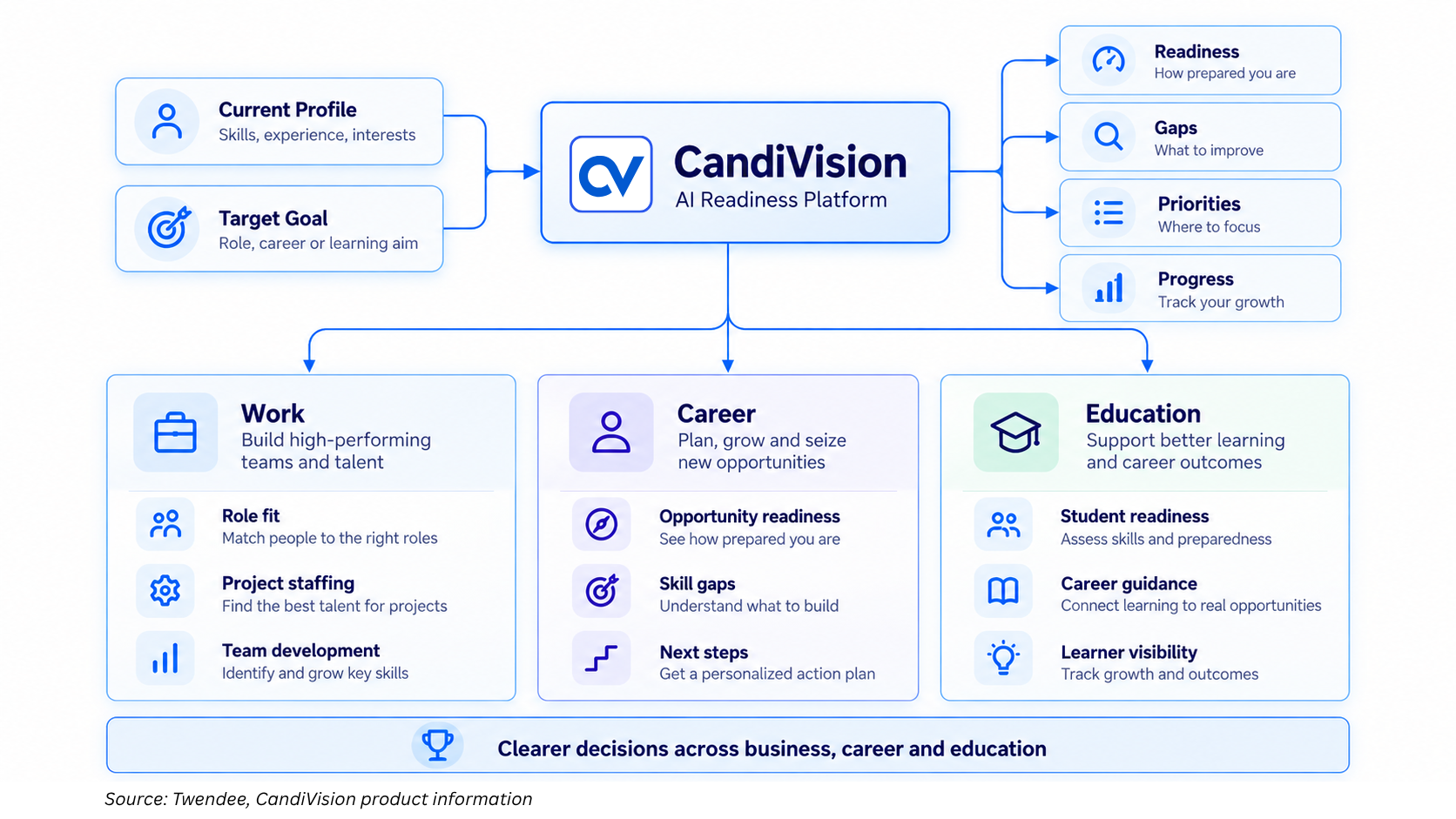
CandiVision helps answer those questions by assessing current readiness against a defined goal, identifying what is missing and turning that assessment into clearer development priorities.

Blog | 03 October 2026
Meet CandiVision, an AI Readiness Platform for Admission and Employment
Choosing a university, applying for a scholarship, or preparing for a first job often comes with the same challenge: people know what they have achieved, but they do not always know how well that profile matches a specific opportunity or what they should improve next. CandiVision was built to make that journey clearer. The platform uses AI to help users understand their readiness for a target major, scholarship, or job, identify gaps, and turn those insights into practical next steps. As CandiVision moves into its next stage of growth, Twendee is joining the journey as a Strategic Partner, supporting both market expansion and the continued development of the product.
Blog | 01 October 2026
Workflow Orchestration Is Becoming the Missing Layer Between Apps, Data and Business Execution
Many companies already have enough software. Sales has CRM. Finance has accounting systems. Operations has ERP. HR has its own platform. Management has dashboards. The problem starts when work needs to move across those systems. A customer order may begin with sales, move to finance for payment terms, reach operations for fulfillment, trigger inventory updates, create billing records and return to customer service for follow-up. Each team may do its own part well, while the full workflow still becomes slow, unclear or hard to trace. This is why workflow orchestration is becoming important. The value is not adding another layer of automation. The value is making cross-system work visible, accountable and easier to control.
