AI is making software faster and cheaper to build. In a controlled GitHub study, developers using Copilot completed a coding task 55% faster than those working without it. As interfaces and individual capabilities become easier to reproduce, the central question for enterprise software strategy changes: what remains difficult for competitors to copy? Increasingly, the answer lies beneath the interface in proprietary data, embedded workflows, integrations and the systems of record that enterprises depend on to run their operations.
AI Is Making Software Features Easier to Replicate
Software functionality used to provide a stronger barrier to entry. Building a complex enterprise application required experienced engineering teams, substantial budgets and long development cycles. Every dashboard, workflow or new user interface represented meaningful technical effort.
Generative AI is reducing that effort. McKinsey found that AI-assisted development tools could reduce the time required for code generation by 35–45%, code documentation by 45–50%, and refactoring by 20–30%. (McKinsey)
That does not make software development trivial, particularly for complex enterprise systems. It does mean that many visible product capabilities are becoming easier to reproduce. A competitor can increasingly build a similar dashboard, natural-language search interface or workflow assistant without starting from zero. Established vendors can also add similar AI capabilities across their existing products.
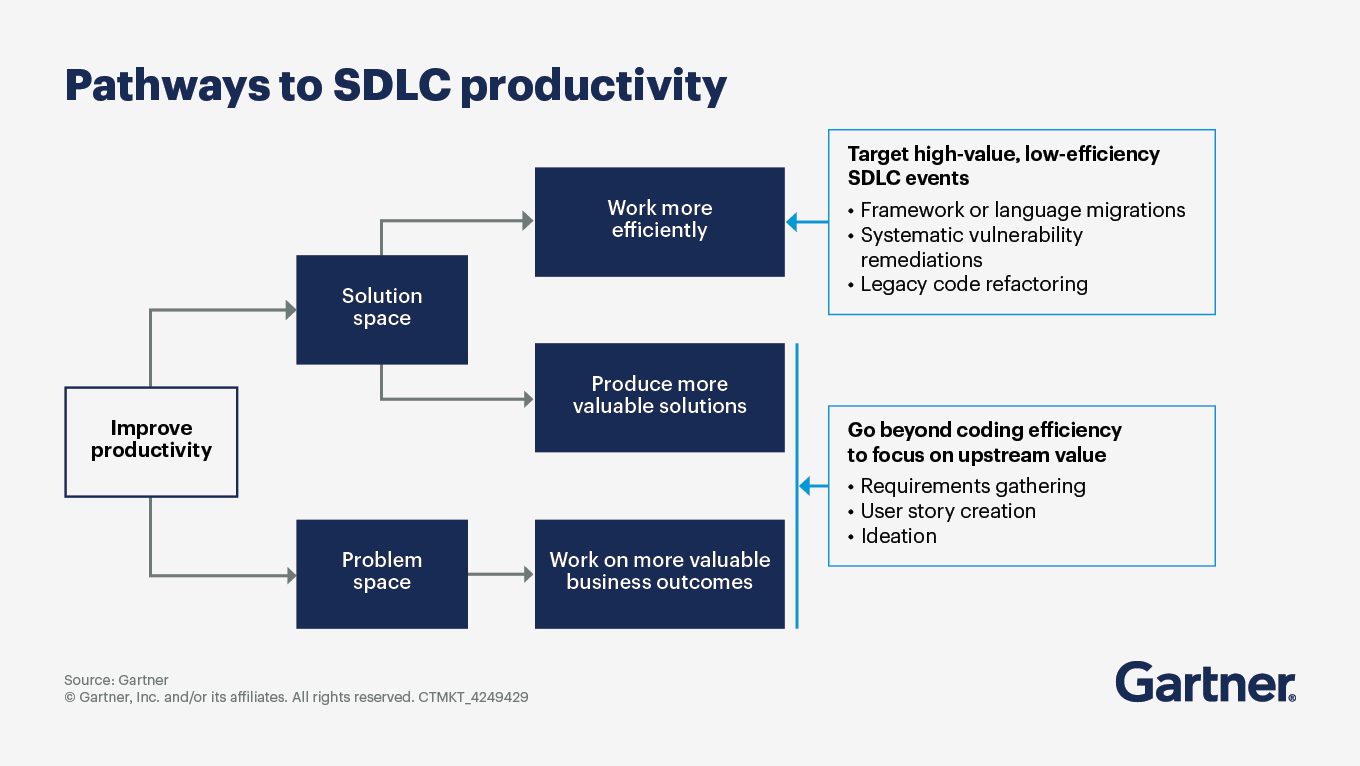
Gartner framework showing pathways to software development productivity through efficiency and higher-value business outcomes (source: garner)
This weakens an enterprise software moat built primarily around individual features. The harder part to reproduce is what sits underneath them: years of transaction history, company-specific business rules, permissions, exception handling and connections to other operational systems. The distinction matters because AI is commoditizing the surface of software faster than it is commoditizing its operational depth.
The Enterprise Software Moat Is Moving Into Data, Workflows and Systems
Proprietary data is one of the clearest examples. General-purpose AI can understand an invoice or purchase order. It does not automatically know which customers usually pay late, which suppliers repeatedly miss commitments, which invoice is currently disputed or which exception requires management approval.
That context develops inside enterprise applications through years of business activity. IBM's 2025 CEO Study, covering 2,000 CEOs across 33 countries and 24 industries, found that 72% viewed proprietary data as critical to unlocking generative AI value. Another 68% said an integrated enterprise-wide data architecture was important for cross-functional collaboration. (IBM)
Embedded workflows create a similar advantage. Enterprise processes contain business logic that is rarely visible from the application interface. A purchase request might follow different approval paths depending on value, department, supplier risk and budget availability. A payment exception may require information from finance, customer records and previous disputes before anyone can decide what to do next. These rules represent operational knowledge accumulated by the organization.
McKinsey recently documented a medical-technology company that selected an off-the-shelf platform for an AI initiative but discovered that it could not support several critical matching-workflow rules. The company reduced the project scope rather than rebuilding the missing logic, leaving an estimated 30% of the intended value unrealized. (McKinsey)
Integrations add another layer of defensibility. Enterprise processes often cross ERP, CRM, inventory, finance, payment and logistics systems. MuleSoft's 2025 Connectivity Benchmark found that enterprises operated an average of 897 applications, while only 29% were connected on average. IT teams reported spending roughly 39% of their time designing, building and testing custom integrations. (Salesforce/MuleSoft)
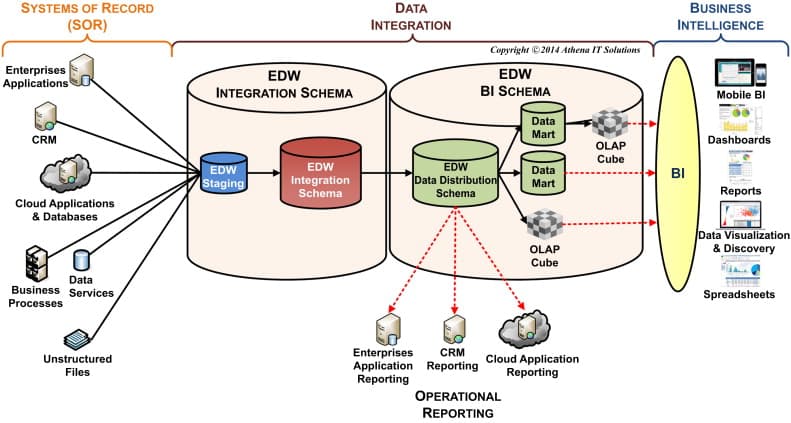
Enterprise architecture showing systems of record, data integration and business intelligence layers (source: ciencedirect)
This is why generating a new application is very different from replacing an established operational system. Reproducing the interface may be relatively straightforward. Rebuilding the integrations, data relationships, permissions and process dependencies behind it is much harder.
The same logic strengthens the value of the system of record. Consider an employee asking an AI assistant: “Which orders are most likely to miss delivery this week?”
Creating the conversational interface is increasingly easy. Giving a reliable answer requires current order status, inventory availability, shipment information and customer commitments. If the AI can then reallocate stock or escalate an order, those underlying records must also be trustworthy enough to support an action. As enterprise software AI moves from answering questions toward executing processes, systems that hold authoritative data and reliable workflows can become more valuable—not less.
Enterprise Software Strategy Should Build Around Durable Operational Value
This creates a different way to think about software investment. The question is no longer simply whether an enterprise should build or buy another application. Companies first need to identify where their own operational differentiation actually exists.
A standard expense approval interface may offer little competitive advantage and can reasonably sit on an existing platform. A pricing model shaped by proprietary customer data, a reconciliation process built around unique transaction rules or a supply-chain workflow containing years of operational knowledge may deserve a different approach.
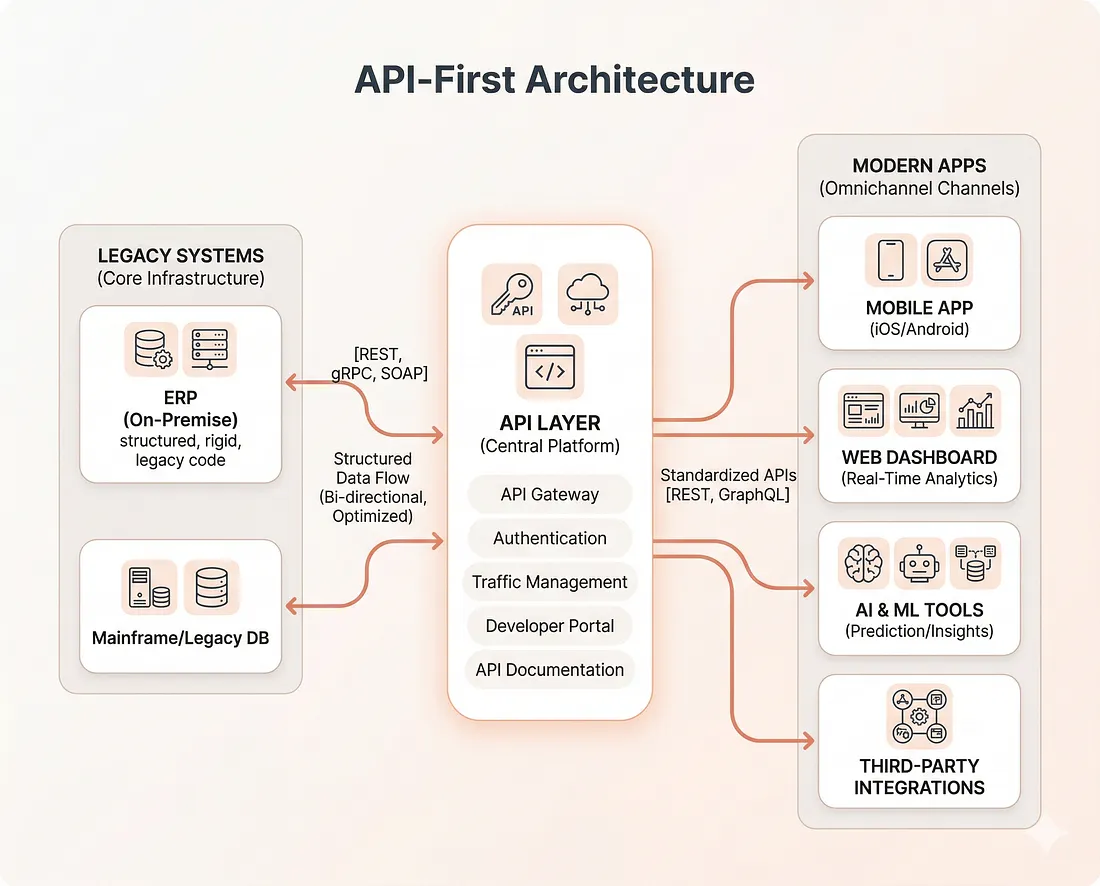
API-first enterprise architecture connecting legacy ERP and databases with modern applications, AI tools and third-party integrations (source: medium)
Twendee works from this process level. The first step is identifying where proprietary workflows, data and decision logic create meaningful differentiation. Existing enterprise applications can then be extended with new interfaces, automation or AI capabilities without unnecessarily replacing the systems that already contain valuable operational data.
Where the workflow itself is strategically important, custom development can go deeper. That may involve mapping how work moves across teams, connecting ERP, CRM and internal platforms, defining decision and approval logic, and building software around processes that standard platforms cannot adequately represent.
AI can then become another layer across this architecture. Employees may interact with systems conversationally, agents may coordinate tasks across applications, and routine actions may become automated. The underlying enterprise systems still provide the records, permissions and workflows required to make those actions reliable.
This produces a more durable enterprise software strategy than competing feature by feature. Commodity capabilities can remain standardized. Engineering investment can concentrate on proprietary processes and data that become more valuable as the organization uses them.
Conclusion
AI is lowering the cost of building software, but it is not eliminating the value of enterprise software. It is changing where that value sits. Interfaces and individual features are becoming easier to reproduce. Proprietary data, deeply embedded workflows, integrations and trusted systems of record remain much harder to replicate. The strongest enterprise software moat in the AI era may therefore sit deeper inside the business: in the operational systems that give AI the context and processes it needs to produce reliable outcomes. Twendee helps enterprises identify these areas, extend existing systems with new AI capabilities and build custom applications around workflows where software can create durable operational value.
Explore Twendee ERP · Explore Agentee · Discuss with Twendee